Author Archives: bwisnewski

VA Loan Basics

VA Loan Basics

by Nick Gromicko and Rob London

A VA loan is a mortgage loan guaranteed by the U.S. Department of Veterans Affairs (VA). VA loans can be very helpful for veterans

Like FHA loans, VA loans are backed by the federal government in order to protect lenders against default, an assurance that removes barriers to home buying for prospective homeowners when they attempt to get a mortgage. This loan guarantee has its origins in the Servicemen’s Readjustment Act (more commonly known as the G.I. Bill), passed by U.S. Congress in 1944 to provide a wide range of benefits for soldiers returning from WWII. Eligibility for VA loans – as well as unemployment compensation, vocational training, and other offerings of the G.I. Bill – have since been made available to veterans of subsequent wars and peacetime service.

VA loans serve two primary purposes:

  • to finance loans for eligible veterans in regions where private financing is not available, which are generally rural areas, and small cities and towns far from metropolitan and commuting areas of large cities; and
  • to help eligible veterans who lack sufficient funds for a down payment to purchase properties.

VA loans offer eligible veterans a number of benefits that are not available to recipients of conventional loans. Note that not all of the following features are available to those receiving FHA loans. VA loan benefits include:

  • 100% financing on purchases and refinances. Loans are available up to $417,000 (as of 2009), although this amount is higher in some areas with a higher cost of living and/or inflated real estate markets, such as Hawaii, Alaska and California;
  • no Private Mortgage Insurance (PMI). PMI is money paid to a lender to offset losses in the event that the borrower defaults and the lender cannot recover its investment after foreclosure;
  • fixed, competitive interest rates;
  • the loan is assumable, meaning that borrowers can sell their homes to non-veterans and pass along the benefits of the VA loan to the buyers;
  • forbearance, in which the federal government can extend leniency to veterans experiencing temporary financial hardship;
  • no prepayment penalty. Penalties are applied to conventional loans when borrowers choose to pay off their mortgages early, which then gives them the option of refinancing at a lower interest rate;
  • easy credit and low income standards, compared with conventional loans;
  • the builder of a new home is required to give the purchasing veteran a one-year warranty, protecting the borrower against construction that conflicts with VA-approved specifications. Also, the VA will compensate the borrower for correction of structural defects in the home within four years of the loan guarantee if the defects seriously affect livability. An InterNACHI inspector should be hired to inspect for structural defects;
  • the borrower may be charged only the fees and other costs that the VA considers appropriate;
  • the down payment may be financed. Closing costs and funding fees still apply, however; and
  • in California, veterans may be eligible to receive additional benefits from a Cal-Vet Home Loan, such as reusability (you can receive a new Cal-Vet loan whenever you purchase a property as long as you have paid off previous Cal-Vet loans), and earthquake, fire and mudslide protection plans.
In order to be eligible for a VA home loan, the borrower must obtain a Certificate of Eligibility by completing the VA Form 26-1880. Veterans, active-duty, guard, reserve, and military spouses potentially qualify for this certificate. Veterans and active military personnel need to have served for a designated duration, depending on war- or peacetime, in order to be considered eligible. The certificate states the entitlement amount, which is the portion of mortgage that the VA will guarantee for each serviceperson. Keep in mind that the Certificate of Eligibility, while necessary for the loan process, only allows an eligible individual to apply for a home loan, but it does not guarantee loan approval.
In summary, VA loans offer eligible veterans a variety of benefits that are not available to recipients of conventional or even FHA loans.


FHA Loan Basics

FHA Loan Basics

by Nick Gromicko and Rob London
An FHA loan is a federal-assistance mortgage loan offered by qualified lenders and backed by the Federal Housing Administration.
During the Great Depression of the 1930s, soaring foreclosure and default rates led lenders to tighten their loan requirements to the detriment of the prospective homeowner. The FHA was created during this time to provide lending institutions (such as banks, savings and loan associations, and mortgage companies) with sufficient insurance to allow them to ease up on eligibility requirements for borrowers so that they could be approved for loans that they could not otherwise afford. If a borrower defaults on an FHA loan, the FHA pays off the mortgage from a reservoir of collected fees. The FHA funds this reservoir with fees charged to the borrower, such as an upfront mortgage insurance premium, and small, ongoing monthly fees.

FHA loans offer the following benefits over conventional loans:

  • low down payments. In general, the cost to the home buyer is approximately 0.75% to 1% less than conventional financing, meaning that they will need $1,500 to $2,000 less upfront to purchase a $200,000 home;
  • low closing costs. Closing costs are miscellaneous fees charged by those involved with the home sale, such as the surveyor, home inspector, the lender (for processing the loan), and the title company (for handling the paperwork). To get the most value for their dollar during closing, homeowners should make sure to hire only InterNACHI inspectors;
  • an easier time qualifying for credit, which is especially important for borrowers with no credit (although someone with poor credit will probably be ineligible for an FHA loan);
  • a greater ability to use “gifts” for the down payment. Most conventional lenders require the home buyer to pay a percentage of the loan’s cost from their own personal funds, while FHA loans may be gifted from family or friends;
  • no pre-payment penalty, which is a big plus for subprime borrowers;
  • a loan which may be assumable. Assumable loan obligations may be transferred to a qualified purchaser without the lender’s permission. Ideally, such loans are purchased during a period of low interest rates and sold later when these rates are higher. Veterans Administration loans also may be assumable, but conventional loans generally are not;
  • possible leniency or loan deferment during financial hard times; and
  • funding for home improvement through FHA 203k Programs.

How does a home buyer get an FHA loan?

Home buyers who wish to obtain FHA loans need to contact several lenders and ask them if they make FHA-backed loans. Bear in mind that each lender sets its own terms and rates, so comparison-shopping is critical. Next, the lender assesses the borrower for risk by examining their income level, debt-to-income ratio, credit repayment history, and expenses. Certain other factors are also considered, such as how the property will be used, how many units are on the property, and whether the borrower will actually live in the home. Note that prospective homeowners may be denied an FHA loan if they plan to rent the property out to others and not live in it themselves.

What are the limitations and disadvantages of an FHA loan?
  • lower loan amounts. FHA home loans have lower limits than what may be needed to buy the home of one’s dreams. Loans borrowed under Fannie Mae or Freddie Mac, for instance, have much higher limits than FHA loans;
  • limited options. FHA loans were constructed to serve a particular segment of buyers, so the loans come with few variations. These more conservative loans are designed to limit lender losses; and
  • an upfront mortgage insurance premium (UFMIP) equal to 1.5% of the base mortgage amount.
In summary, prospective homeowners considering FHA loans should weigh their individual finances, needs and credit history, along with the pros and cons unique to this type of mortgage.


Hard Water

Hard Water

by Nick Gromicko and Rob London
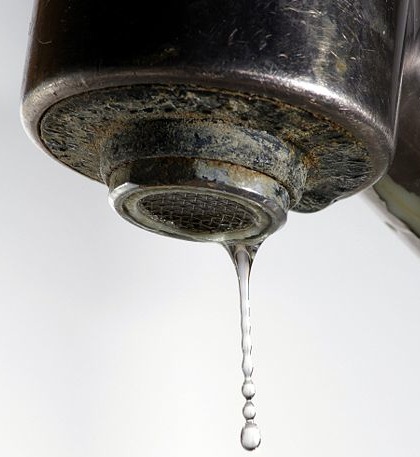
Water “hardness” refers to the level of minerals found in a home’s water supply.  Hard water results when an excessive amount of minerals, chiefly calcium and magnesium, are dissolved into water as it passes through soil and rock. The degree of hardness becomes greater as the mineral content increases. Hard water presents numerous mechanical and aesthetic problems in homes, but it is not Shower heads can become calcified as a result of hard waterconsidered a health hazard to humans.

Identifying Hard Water

The best way to determine whether or not a home has hard water is to have it tested. For homes served by municipal water systems, you can ask the water supplier about the hardness level of the water they deliver. Private water supplies can be tested for hardness. However, hard water (especially if it is excessively hard) can be detected by inspectors and their clients through the negative effects it has on a home. The most common problems associated with hard water are:

  • poor washing machine performance. Clothes washed in hard water often look dingy and feel scratchy or stiff. Continuous laundering in hard water can damage fibers and shorten the lifespan of clothes;
  • a mineral ring around the tip of a faucet or in a toilet bowl;
  • unsightly, whitish scale deposits in pipes, water heaters, tea kettles, pots, silverware and dishes;
  • calcification of taps and shower- heads;
  • inefficient and costly operation of water-using appliances. Pipes can become clogged with scale that reduces water flow, ultimately requiring pipe replacement. Crystalline deposits (limescale) have been known to increase energy bills considerably;
  • soap curd and scum in washbasins and bathtubs. Bathing with soap in hard water leaves a film of sticky soap curd on the skin, which may prevent removal of soil and bacteria. Soap curd on hair may make it dull, lifeless and difficult to manage. Soap curd also interferes with the return of skin to its normal, slightly acid condition, and may lead to irritation; and
  • limescale in solar heating systems. Solar heating, often used to heat swimming pools, is prone to limescale buildup, which can reduce the efficiency of the electronic pump.

Hard Water Concentration Levels

Descriptions of water hardness correspond with ranges of mineral concentrations, as measured below in parts per million (ppm):

Description of Water Hardness Level
Harness Level Concentration of harness minerals in grains per gallon (gpg)
Milligrams per liter (mg/l) or parts per million (ppm)
Soft less than 1
less than 17
Slightly Soft 1 – 3.5
 17 – 60
 Moderately Hard
 3.5 – 7
61 – 120
 Hard
7 – 10.5
 121 – 180
Very Hard
 more than 10.5
 more than 180

Note that since water’s acidity and temperature partly determines the behavior of hard water, a single-number scale does not adequately describe the realistic effects of hard water on household components.

Hard Water and Human Health

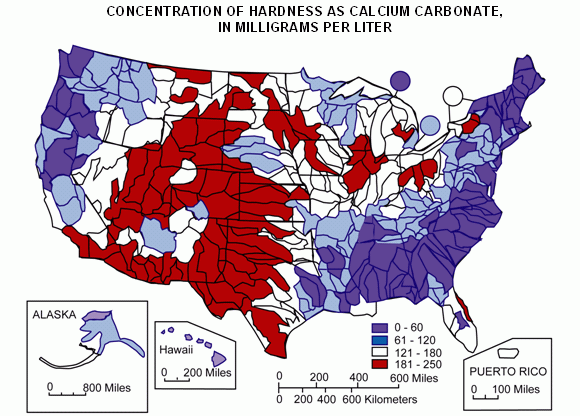
The World Health Organization reports, ” There does not appear to be any convincing evidence that water hardness causes adverse health effects in humans. In contrast, the results of a number of epidemiological studies have suggested that water hardness may protect against disease.” The report further states that hard water often contributes a small amount toward total calcium and magnesium human dietary needs. Map showing the hardness of water throughout the United States

Geographic Distribution of Hard Water in the U.S.

According to the U.S. Geological Survey, softest waters are in the Pacific Northwest, parts of New England, the South Atlantic-Gulf states, and Hawaii. Moderately hard waters are common in many rivers of Alaska and Tennessee, in the Great Lakes region, and the Pacific Northwest. Hardest waters (greater than 1,000 mg/L) are measured in streams in Texas, New Mexico, Kansas, Arizona and Southern California.

Treatment:  Softeners and Conditioners

Water softeners remove unwanted minerals through an ion-exchange process. Incoming hard water passes through a tank of ion- exchange beads that are super-saturated with sodium. The calcium and magnesium ions in the water attach to the resin beads, replacing the sodium, which is then released into the water. The softened water is subsequently distributed for use throughout the house, but it may be unsuitable for drinking due to its high sodium content.

In water conditioners, by contrast, calcium ions remain suspended in the water as small particles, but their tendency to form limescale is diminished. This system allows the benefit that the calcium, which is a good dietary mineral, remains in the water. Water conditioners are more controversial and they do not work in every situation.

In summary, the common problem of hard water is easy to spot and mitigate.


Water Quality

Water Quality

Drinking Water
 
The United States has one of the safest water supplies in the world. However, national statistics don’t tell you specifically about the quality and safety of the water coming out of your tap. That’s because drinking water quality varies from place to place, depending on the condition of the source water from which it is drawn, and the treatment it receives. Now you have a new way to find information about your drinking water if it comes from a public water supplier (The EPA doesn’t regulate private wells, but recommends that well.  owners have their water tested annually.) Starting in 1999, every community water supplier must provide an annual report (sometimes called a “consumer confidence report”) to its customers. The report provides information on your local drinking water quality, including the water’s source, the contaminants found in the water, and how consumers can get involved in protecting drinking water. You may want more information, or you may have more questions. One place you can go is to your water supplier, who is best equipped to answer questions about your specific water supply. 
 
What contaminants may be found in drinking water?
 
There is no such thing as naturally pure water. In nature, all water contains some impurities. As water flows in streams, sits in lakes, and filters through layers of soil and rock in the ground, it dissolves or absorbs the substances that it touches. Some of these substances are harmless. In fact, some people prefer mineral water precisely because minerals give it an appealing taste. However, at certain levels, minerals, just like man-made chemicals, are considered contaminants that can make water unpalatable or even unsafe. Some contaminants come from the erosion of natural rock formations. Other contaminants are substances discharged from factories, applied to farmlands, or used by consumers in their homes and yards. Sources of contaminants might be in your neighborhood or might be many miles away. Your local water quality report tells which contaminants are in your drinking water, the levels at which they were found, and the actual or likely source of each contaminant. Some ground water systems have established wellhead protection programs to prevent substances from contaminating their wells. Similarly, some surface-water systems protect the watershed around their reservoir to prevent contamination. Right now, states and water suppliers are working systematically to assess every source of drinking water, and to identify potential sources of contaminants. This process will help communities to protect their drinking water supplies from contamination. 
 
Where does drinking water come from?

A clean, constant supply of drinking water is essential to every community. People in large cities frequently drink water that comes from surface-water sources, such as lakes, rivers and reservoirs. Sometimes, these sources are close to the community. Other times, drinking water suppliers get their water from sources many miles away. In either case, when you think about where your drinking water comes from, it’s important to consider not just the part of the river or lake that you can see, but the entire watershed. The watershed is the land area over which water flows into the river, lake or reservoir. In rural areas, people are more likely to drink ground water that was pumped from a well. These wells tap into aquifers, the natural reservoirs under the earth’s surface, that may be only a few miles wide, or may span the borders of many states. As with surface water, it is important to remember that activities many miles away from you may affect the quality of ground water. Your annual drinking water quality report will tell you where your water supplier gets your water.
 
How is drinking water treated?

When a water supplier takes untreated water from a river or reservoir, the water often contains dirt and tiny pieces of leaves and other organic matter, as well as trace amounts of certain contaminants. When it gets to the treatment plant, water suppliers often add chemicals, called coagulants, to the water. These act on the water as it flows very slowly through tanks so that the dirt and other contaminants form clumps that settle to the bottom. Usually, this water then flows through a filter for removal of the smallest contaminants, such as viruses and Giardia. Most ground water is naturally filtered as it passes through layers of the earth into underground reservoirs known as aquifers. Water that suppliers pump from wells generally contains less organic material than surface water, and may not need to go through any or all of these treatments.
The quality of the water will depend on local conditions. The most common drinking water treatment, considered by many to be one of the most important scientific advances of the 20th century, is disinfection. Most water suppliers add chlorine or another disinfectant to kill bacteria and other germs. Water suppliers use other treatments as needed, according to the quality of their source water. For example, systems whose water is contaminated with organic chemicals can treat their water with activated carbon, which adsorbs or attracts the chemicals dissolved in the water.
 
What if I have special health needs?

People who have HIV/AIDS, are undergoing chemotherapy, take steroids, or for another reason have a weakened immune system may be more susceptible to microbial contaminants, including Cryptosporidium, in drinking water. If you or someone you know fall into one of these categories, talk to your healthcare provider to find out if you need to take special precautions, such as boiling your water. Young children are particularly susceptible to the effects of high levels of certain contaminants, including nitrate and lead. To avoid exposure to lead, use water from the cold tap for making baby formula, drinking and cooking, and let the water run for a minute or more if the water hasn’t been turned on for six or more hours. If your water supplier alerts you that your water does not meet the EPA’s standard for nitrates, and you have children under 6 months old, consult your healthcare provider. You may want to find an alternate source of water that contains lower levels of nitrates for your child.
 
What are the health effects of contaminants in drinking water?

The EPA has set standards for more than 80 contaminants that may be present in drinking water and pose a risk to human health. The EPA sets these standards to protect the health of everybody, including vulnerable groups like children. The contaminants fall into two groups, according to the health effects that they cause. Your local water supplier will alert you through the local media, direct mail, or other means if there is a potential acute or chronic health effect from compounds in the drinking water. You may want to contact them for additional information specific to your area. Acute effects occur within hours or days of the time that a person consumes a contaminant. People can suffer acute health effects from almost any contaminant if they are exposed to extraordinarily high levels (as in the case of a spill). In drinking water,microbes, such as bacteria and viruses, are the contaminants with the greatest chance of reaching levels high enough to cause acute health effects. Most people’s bodies can fight off these microbial contaminants the way they fight off germs, and these acute contaminants typically don’t have permanent effects. Nonetheless, when high-enough levels occur, they can make people ill, and can be dangerous or deadly for a person whose immune system is already weak due to HIV/AIDS, chemotherapy, steroid use, or another reason. Chronic effects occur after people consume a contaminant at levels over the EPA’s safety standards for many years. The drinking water contaminants that can have chronic effects are chemicals (such as disinfection byproducts, solvents, and pesticides), radionuclides (such as radium), and minerals (such as arsenic). Examples of these chronic effects include cancer, liver and kidney problems, and reproductive difficulties.
 
Who is responsible for drinking water quality?

The Safe Drinking Water Act gives the Environmental Protection Agency (EPA) the responsibility for setting national drinking water standards that protect the health of the 250 million people who get their water from public water systems. Other people get their water from private wells which are not subject to federal regulations. Since 1974, the EPA has set national standards for over 80 contaminants that may occur in drinking water. While the EPA and state governments set and enforce standards, local governments and private water suppliers have direct responsibility for the quality of the water that flows to your tap. Water systems test and treat their water, maintain the distribution systems that deliver water to consumers, and report on their water quality to the state. States and the EPA provide technical assistance to water suppliers and can take legal action against systems that fail to provide water that meets state and EPA standards.
 
 What is a violation of a drinking water standard?

Drinking water suppliers are required to monitor and test their water many times, for many things, before sending it to consumers. These tests determine whether and how the water needs to be treated, as well as the effectiveness of the treatment process. If a water system consistently sends to consumers water that contains a contaminant at a level higher than EPA or state health standards regulate, or if the system fails to monitor for a contaminant, the system is violating regulations, and is subject to fines and other penalties. When a water system violates a drinking water regulation, it must notify the people who drink its water about the violation, what it means, and how they should respond. In cases where the water presents an immediate health threat, such as when people need to boil water before drinking it, the system must use television, radio and newspapers to get the word out as quickly as possible. Other notices may be sent by mail, or delivered with the water bill. Each water suppliers’ annual water quality report must include a summary of all the violations that occurred during the previous year.
How can I help protect my drinking water?
Using the new information that is now available about drinking water, citizens can be aware of the challenges of keeping drinking water safe and take an active role in protecting drinking water. There are lots of ways that individuals can get involved. Some people will help clean up the watershed that is the source of their community’s water. Other people might get involved in wellhead protection activities to prevent the contamination of the ground water source that provides water to their community. These people will be able to make use of the information that states and water systems are gathering as they assess their sources of water.  Concerned citizens may want to attend public meetings to ensure that their community’s need for safe drinking water is considered in making decisions about land use. You may wish to participate when your state and water system make funding decisions. And all consumers can do their part to conserve water and to dispose properly of household chemicals.




Water Heater Expansion Tanks

Water Heater Expansion Tanks

by Nick Gromicko, Rob London and Kenton Shepard
What is an expansion tank?
 
An expansion tank is a metal tank connected to a building’s water heating appliance designed to accommodate fluctuations in the volume of a building’s hot water supply system. These fluctuations occur because water expands in volume as it gets hot and loses volume as it cools.
Expanding water volume in a closed system can create dangerously high water pressure. As water is forced into the tank by expansion, it compresses air contained inside of a rubber bladder. Air is used as a cushion because it exerts less force on its container than water, which cannot be compressed.
The function of this bladder is to prevent air from becoming absorbed into the water, a process that could cause the expansion tank to lose its ability to act as a sort of shock absorber. If, over time, the bladder begins to leak some air, a Schrader valve, identical to the fill valve found on bicycle and car tires, can be used to add more air.
What does it look like, inside and out?
Expansion tanks are considerably smaller than water heaters, usually holding about two gallons in residential systems, although tank sizes vary in relation to the water volume of the hot water supply system they serve. The design pressure for which a tank is rated is marked on a label on the tank, commonly 150 pounds per square inch (PSI) for a residential tank.
InterNACHI inspectors should check that tanks are positioned high enough above the water heater that water will easily drain back down into the water heater tank.  It is best positioned near the water heater and may be installed vertically, either above or below the horizontal supply pipe, but can also be positioned horizontally. Horizontally-hung tanks will need additional support to reduce the stress on the copper piping.
The expansion tank should be inspected for proper location and support, corrosion and leakage. Although many jurisdictions now require an expansion tank to be installed at the same time that a water heater is installed, an expansion tank has not always been required in the past and may still not be required in some regions.
Not a Substitute for a Temperature Pressure Relief (TPR) Valve
If water heater controls fail and pressure in the system exceeds 150 PSI, or temperature exceeds 210° F, a temperature and pressure relief valve (TPR valve) installed on the side of the water heater tank will open, safely discharging water from the system. TPR valves are capable of reducing water pressure at a rate greater than the capacity of the water heater to raise it, thus eliminating the possibility that water will become superheated (greater than 212 degrees) and pose a serious threat. The importance of this valve cannot be overstated, and it is crucial that it is examined periodically for rust or corrosion, and the release lever should be exercised monthly by the homeowner, not by the inspector.
If a TPR valve fails to operate when it’s needed, the result can be catastrophic. Pressure will continue to build in the water heater tank as water temperature rises past the boiling point and water becomes superheated. Eventually, pressure in the tank will exceed the ability of the weakest part of the water heater to contain it and the tank will rupture, exposing the superheated water to air and causing an instantaneous and explosive expansion of steam. This situation can propel the water heater like a rocket or make it explode like a bomb, causing extensive property damage, personal injury or death.
In summary, the expansion tank should be inspected for proper location and support, corrosion and leakage. Although not required in every jurisdiction, they are quite crucial to the successful and safe operation of residential potable water systems.