Category Archives: THE INSPECTOR’S CORNER

Aging in Place

InterNACHI

Aging in Place

by Nick Gromicko and Rob London 
“Aging in place” is the phenomenon describing senior citizens‘ ability to live independently in their homes for as long as possible. Those who age in place will not have to move from their present residence in order to secure necessary support services in response to their changing needs.

The Baby Boomers

As the baby boomers age, the 60+ population will spike from roughly 45 million in recent years to more than 70 million by 2020. Research shows that baby boomers’ expectations of how they will receive care differ from that of their parents’ generation.  Overwhelmingly, they will seek care in their own homes and will be less likely to move into congregate living settings.

Why do many senior citizens prefer to age in place?

Nursing homes, to many, represent a loss of freedom and a reduced quality of life. Here are a few good reasons why these fears are justified:

  • In 2007, inspectors received 37,150 complaints about conditions in nursing homes. Roughly one-fifth of the complaints verified by federal and state authorities involved the abuse or neglect of patients. Specific problems included infected bedsores, medication mix-ups, poor nutrition, and other forms of neglect.
  • The proportion of nursing homes cited for deficiencies ranged from 76% in Rhode Island to as high as 100% in Alaska, Idaho, Wyoming and Washington, D.C.
  • Many cases have been exposed in which nursing homes billed Medicare and Medicaid for services that were not provided.
  • A significant percentage of nursing homes had deficiencies that caused immediate jeopardy or actual harm to patients.

Aging-in-Place Inspections 

Inspectors may recommend corrections and adaptations to the home to improve maneuverability, accessibility, and safety for elderly occupants. Some such alterations and recommendations for a home are as follows:

Appliances

    • microwave oven in wall or on counter;
    • refrigerator and freezer side by side;
    • side-swing or wall oven;
    • controls that  are easy to read;
    • raised washing machine and dryer;
    • front-loading washing machines;
    • raised dishwasher with push-button controls;
    • stoves having electric cooktops with level burners for safely transferring between the burners; front controls and downdraft feature to pull heat away from user; light to indicate when surface is hot; and
    • replace old stoves with induction cooktops to help prevent burns.

Bathroom

    • fold-down seat installed in the shower;
    • adjustable showerheads with 6-foot hose;
    • light in shower stall;
    • wall support, and provision for adjustable and/or varied-height counters and removable base cabinets;
    • contrasting color edge border at countertops;
    • at least one wheelchair-maneuverable bath on main level;
    • bracing in walls around tub, shower, shower seat and toilet for installation of grab bars;
    • if stand-up shower is used in main bath, it is curbless and wide;
    • low bathtub;
    • toilet higher than standard toilet, or height-adjustable;
    • design of the toilet paper holder allows rolls to be changed with one hand;
    • wall-hung sink with knee space and panel to protect user from pipes; and
    • slip-resistant flooring in bathroom and shower.

Counters

    • base cabinet with roll-out trays;
    • pull-down shelving;
    • wall support, and provision for adjustable and/or varied-height counters and removable base cabinets;
    • upper wall cabinetry lower than conventional height;
    • accented stripes on edge of countertops to provide visual orientation to the workspace;
    • counter space for dish landing adjacent to or opposite all appliances;
    • glass-front cabinet doors; and
    • open shelving for easy access to frequently used items.

Exterior

    • low-maintenance exterior (vinyl, brick, etc); and
    • low-maintenance shrubs and plants.

Entry

    • sensor light at exterior no-step entry focusing on the front-door lock;
    • non-slip flooring in foyer;
    • accessible path of travel to the home;
    • at least one no-step entry with a cover;
    • entry door sidelight or high/low peep hole viewer; sidelight should provide both privacy and safety;
    • doorbell in accessible location; and
    • a surface on which to place packages while opening door.

Electrical, Lighting, Safety and Security

    • install new smoke and CO detectors;
    • install automated lighting, an emergency alert system, or a video-monitoring system;
    • easy-to-see and read thermostats;
    • light switches by each entrance to halls and rooms;
    • light receptacles with at least two bulbs in vital places (exits, bathroom);
    • light switches, thermostats and other environmental controls placed in accessible locations no higher than 48 inches from floor;
    • move electrical cords out of the flow of traffic;
    • replace standard light switches with rocker or touch-light switches; and
    • pre-programmed thermostats.

Faucets

    • thermostatic or anti-scald controls;
    • lever handles or pedal-controlled; and
    • pressure-balanced faucets.

Flooring

    • if carpeted, use low-density with firm pad;
    • smooth, non-glare, slip-resistant surfaces, interior and exterior; and
    • color and texture contrast to indicate change in surface levels.

Hallways

    • wide;
    • well-lit; and
    • fasten down rugs and floor runners, and remove any that are not necessary.

Heating, Ventilation and Air Conditioning

    • install energy-efficient units;
    • HVAC should be designed so filters are easily accessible; and
    • windows that can be opened for cross-ventilation and fresh air.

Miscellaneous

    • 30-inch by 48-inch clear space at appliances, or 60-inch diameter clear space for turns;
    • multi-level work areas to accommodate cooks of different heights;
    • loop handles for easy grip and pull;
    • pull-out spray faucet;
    • levered handles;
    • in multi-story homes, laundry chute or laundry facilities in master bedroom;
    • open under-counter seated work areas; and
    • placement of task lighting in appropriate work areas.

Overall Floor Plan

    • main living on a single story, including full bath;
    • 5-foot by 5-foot clear turn space in living area, kitchen, a bedroom and a bathroom; and
    • no steps between rooms on a single level.

Reduced Maintenance and Convenience Features

    • easy-to-clean surfaces;
    • built-in recycling system;
    • video phones;
    • central vacuum;
    • built-in pet feeding system; and
    • intercom system.

Stairways, Lifts and Elevators

    • adequate hand rails on both sides of stairway;
    • residential elevator or lift; and
    • increased visibility of stairs through contrast strip on top and bottom stairs, and color contrast between treads and risers on stairs with use of lighting.

Storage

    • lighting in closets;
    • adjustable closet rods and shelves; and
    • easy-open doors that do not obstruct access.

Windows

    • plenty of windows for natural light;
    • low-maintenance exterior and interior finishes;
    • lowered windows, or taller windows with lower sill height; and
    • easy-to-operate hardware.

Advice for those who wish to age in place:

  • Talk with family members about your long-term living preferences. Do you want to downsize to a smaller single-family home, or do you plan to stay put in your traditional family home?
  • Take a look at your finances and retirement funds. With your current savings and assets, will you be able to pay for home maintenance? Consider starting a separate retirement savings account strictly for home maintenance.
  • Remodel your home before your mobility becomes limited. As you age, changes in mobility, hearing, vision and overall health and flexibility will affect how easily you function in your home. Consider making your home “age-friendly” as a phased-in and budgeted home improvement, rather than waiting until you need many modifications at a time due to a health crisis.
  • If you decide before you retire that you want to live in your current home through the remainder of life, consider paying for “big ticket – long life” home projects while you still have a healthy income. Such items may include having the roof assessed or replaced, replacing and upgrading the water heater or cooling unit, completing termite inspections and treatment, having a septic tank inspection and replacement, as needed, and purchasing a riding lawn mower.
  • InterNACHI advocates healthy living, as it plays a vital role in your ability to age in place. Most seniors leave their homes due to functional and mobility limitations that result from medical crises, and an inability to pay for support to stay with them in their home. Effectively managing health risks and maintaining a healthy lifestyle can help you stay strong, age well, and live long at your own home.
In summary, aging in place is a way by which senior citizens can avoid being dependent on others due to declining health and mobility.

Zinsco Electrical Panel

Zinsco Electrical Panel & GTE-Sylvania-Zinsco Circuit Breakers Failure Mechanisms

by Nick Gromicko and Elise London

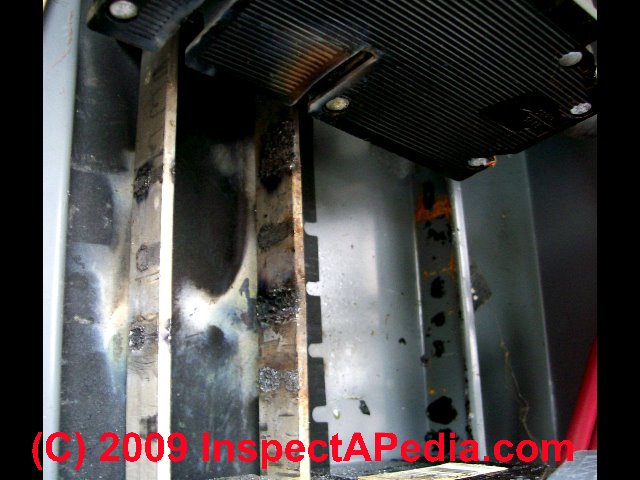
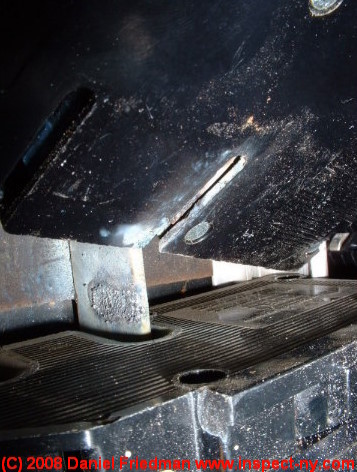
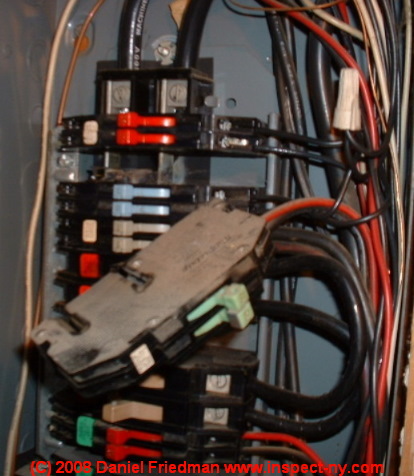
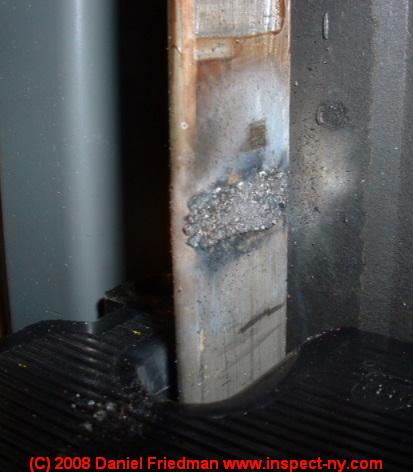
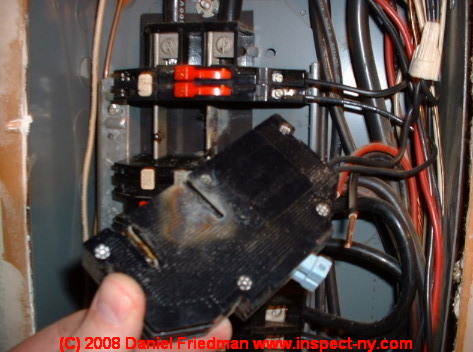
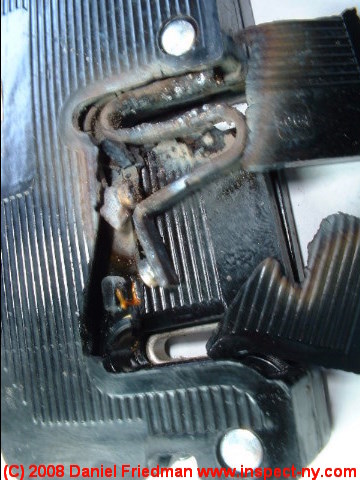
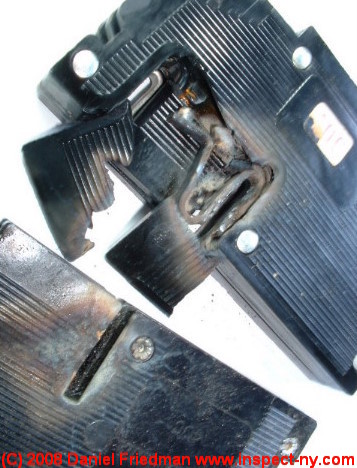
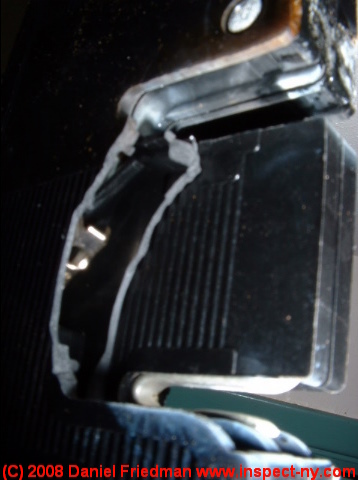
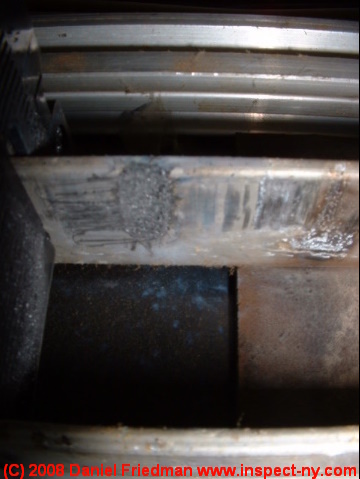
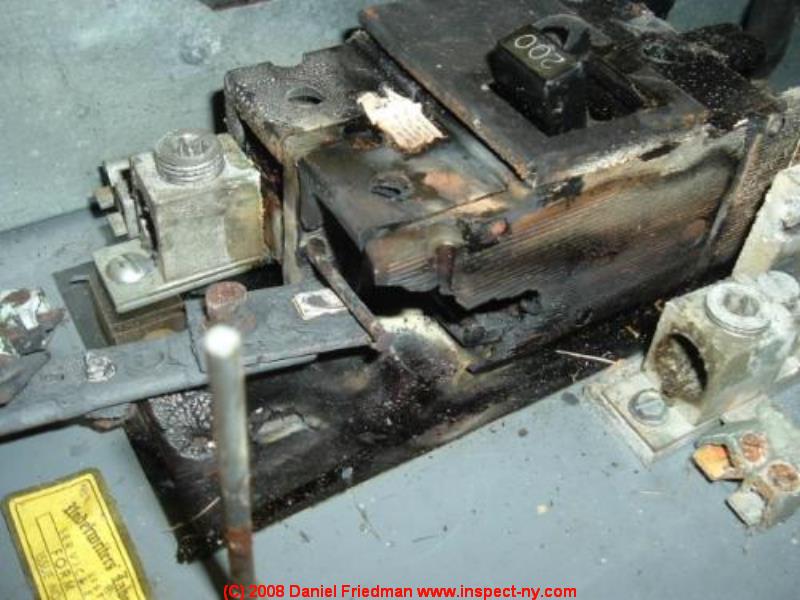
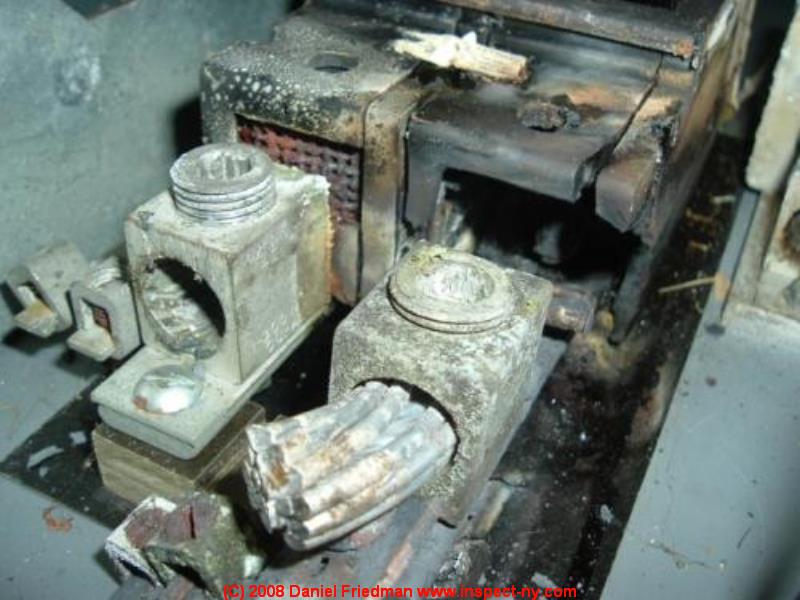
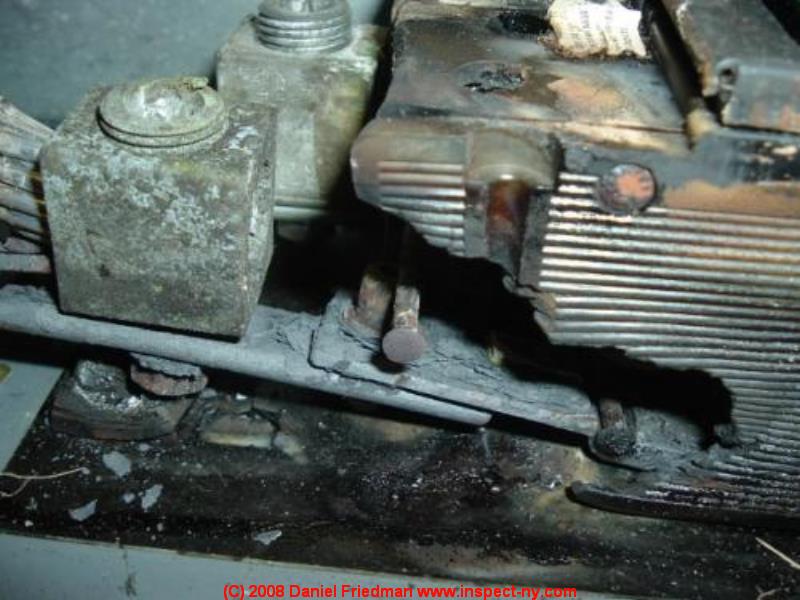
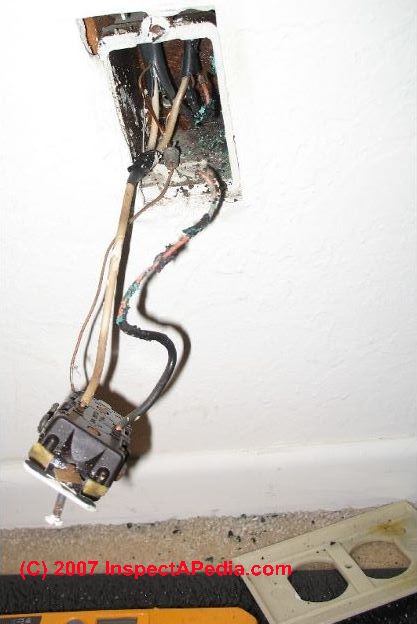
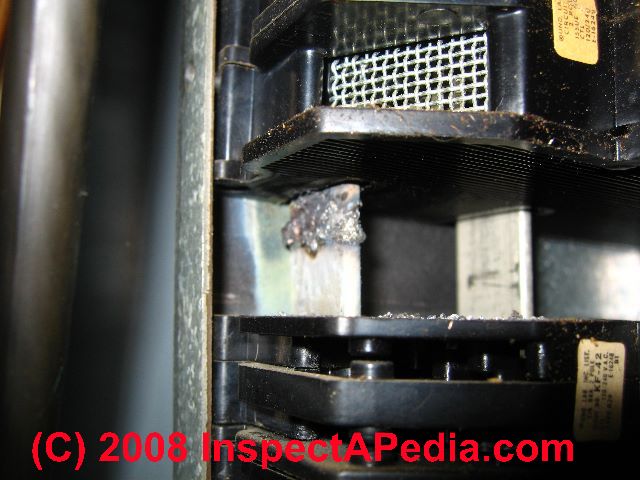
Here we outline the apparent failure mechanism involved with Zinsco and GTE-Sylvania-Zinsco electrical panels and circuit breakers. We include field photographs of Zinsco equipment failures from a variety of sources. This website discusses the electrical, fire, and shock hazards associated with Zinsco electrical components, circuit breakers, electrical panels, including certain Sylvania electrical panels and breakers which are in fact of the same product design and origin. Our page top photo of a burned Zinsco main circuit breaker and burned greased Zinsco electrical panel bus was provided by Washington state electrician J. P. Simmons

  • FAILURE MECHANISM – Failure Mechanisms for Zinsco or Zinsco-Sylvania Electric Panels and Circuit Breakers

Zinsco Sylvania panel bus burnup (C) J Simmons D Friedman

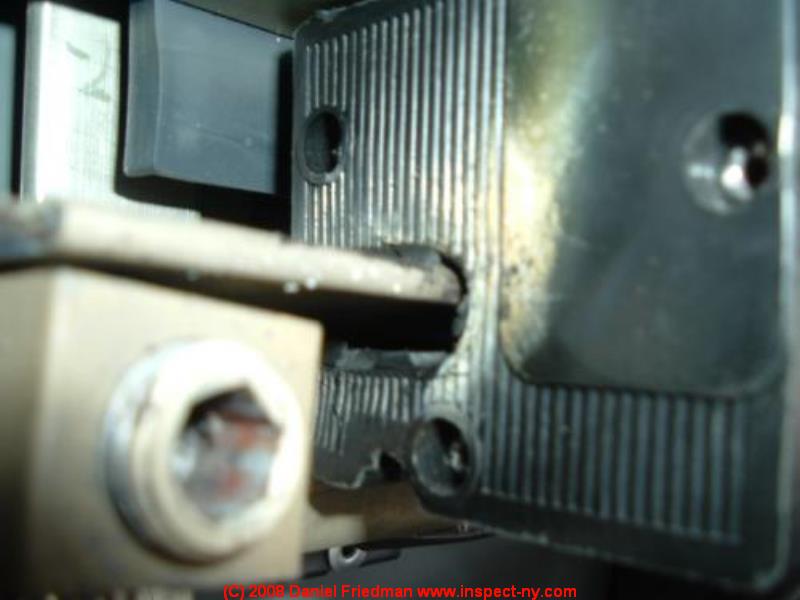
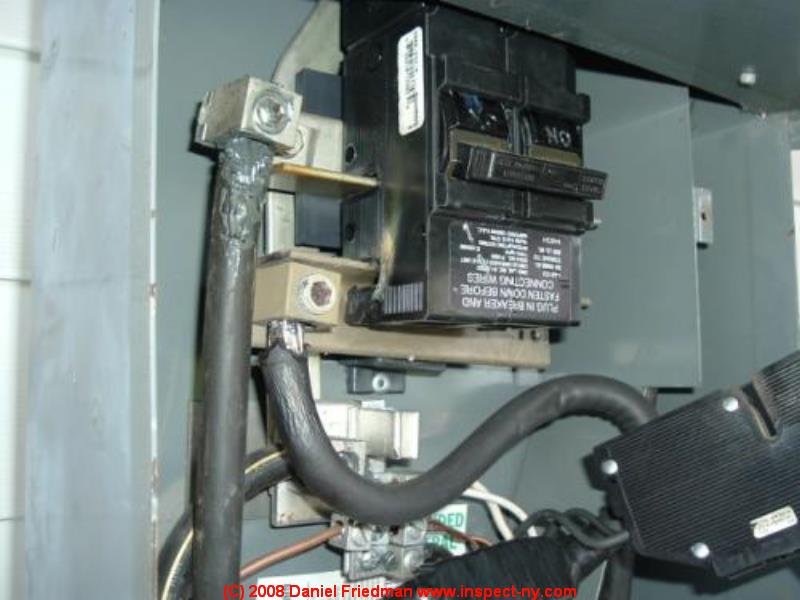
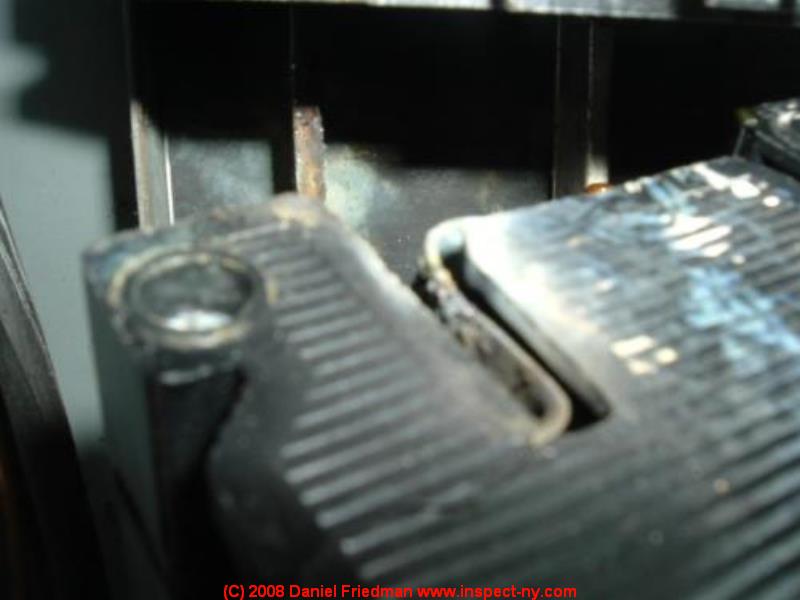
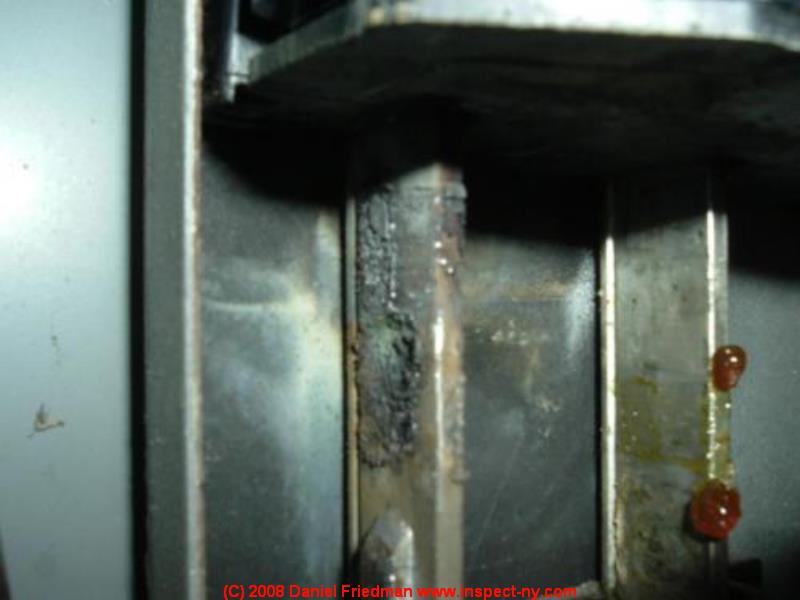
Our photo (left, courtesy of J. P. Simmons) shows the typical Zinsco or Zinsco-Sylvania electrical panel main bus damage from arcing.

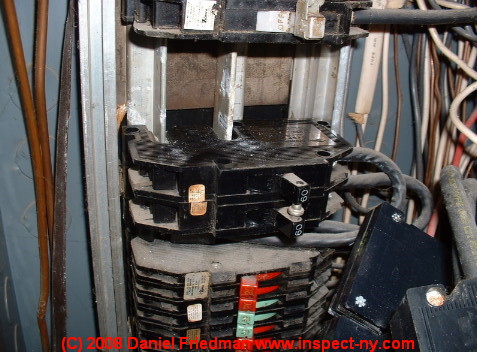
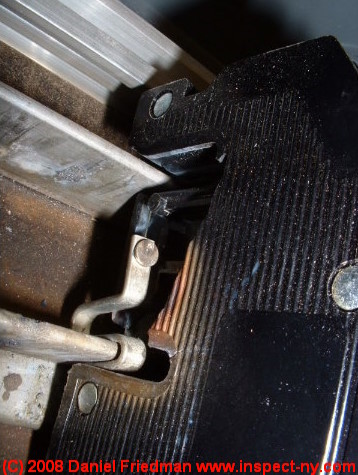
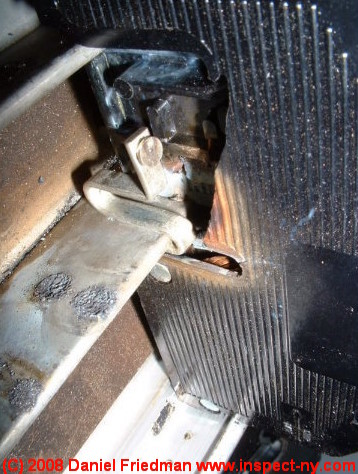
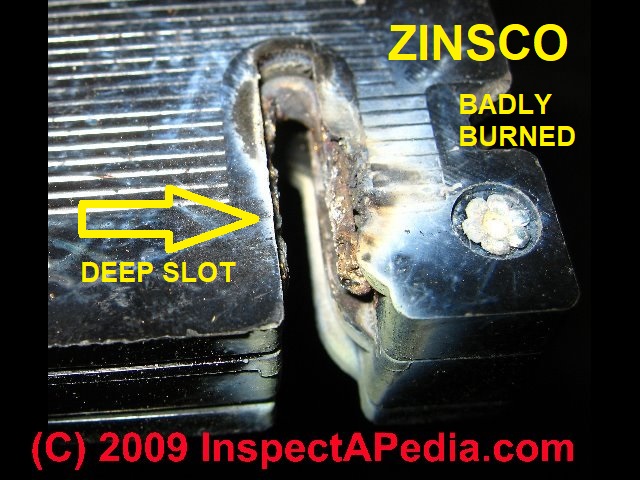
  • Arcing and/or overheating (see ZINSCO OVERHEAT IR PHOTOS), or a similar failure process occurs at the connection of the circuit breaker to the electrical panel bus damage the bus, the breaker, and the connection, making the electrical contact unreliable and leading to equipment failure.
  • Circuit breakers become damaged by arcing or overheating. Damaged circuit breakers are unlikely to perform properly in response to an overcurrent condition.
  • Aluminum electrical panel components appear to be an important factor in failures in this equipment
  • Moisture exposure appears to be a factor in failures in this equipment.

Types of Zinsco Panel and Circuit Breaker Failures

  • Circuit breakers may fail to trip in response to an overcurrent condition. This is a fire and shock risk.
  • Circuit breakers may “blow out” the side casing of the device in an electrical “arc explosion”
  • Circuit breakers may fail to drop power even when they are switched off [remains to be verified–DF] – that is, the breaker may appear to be switched to the “off” position but internally it may still be conducting power to the circuit.

OK to USE ZINSCOS? we report on a different viewpoint from a vendor who continues to market this equipment and feels that at its price point in the market this product is reasonable to use, and who opines that when Zinsco equipment fails (burnups, failures to trip) it is because it was “over-used” at too-demanding an amperage draw. Our view is that it is just under that condition that a circuit breaker should trip off.

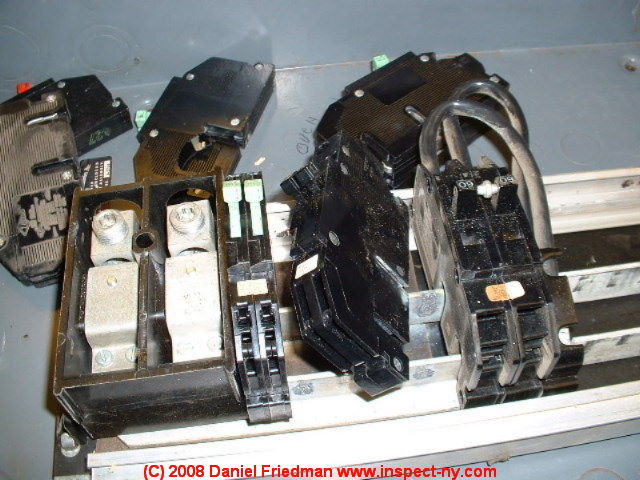
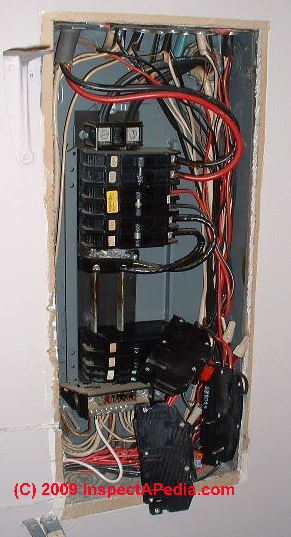
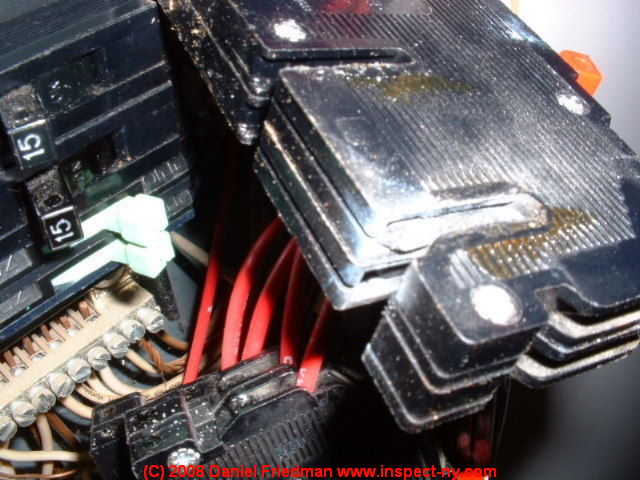
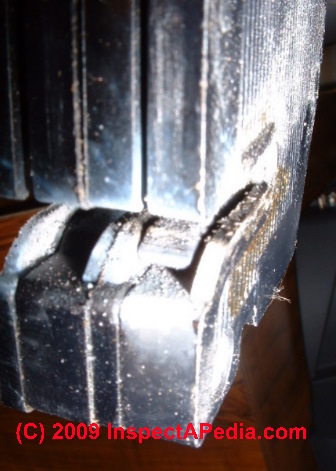
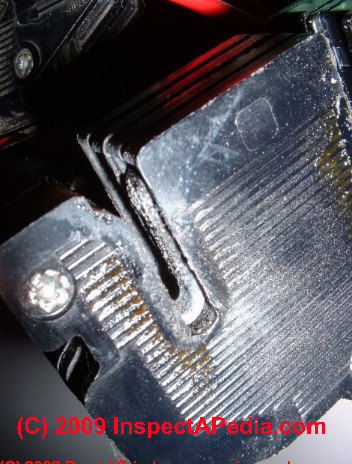
FAILURE PHOTOGRAPHS – Zinsco Sylvania Electric Panel and Breaker Field Failure Photographs

Clicking on any of the thumbnails at left will display a larger photograph.

Zinsco burnup bus (C) D Friedman J Weissman Zinsco burnup bus (C) D Friedman J Weissman

Maintaining Your AC System

Maintaining Your AC System

by Nick Gromicko and Elise London

Keeping your cooler cool- Good practice for AC and Heat pump placement-

The most stressful time for an air conditioning unit or heat pump is when the temperature soars.

This is when a good installer will have helped you protect your investment.

The placement of these units can have an impact on the longevity of the system

Heat Pump placed on the southern side of home

Whenever possible the AC/Heat pump units should be place on the north side of the home or in a shady area.

To help heat pumps and air conditioners operate more efficiently as the summer heat pushes these systems to their limits it is best not to place these units on the south side of a house where they would sit in the sun.

If this is the only option you may consider protecting them with the canopy of a deciduous tree. When they drop their leaves in the fall, sunlight coming through the branches will help warm the house.

It is very important that heat pumps and exterior units for air conditioners have sufficient space around them to allow for free exchange of cool and warm air.  You should avoid any heat generating equipment and where noise will have an impact on occupants.

Heat Pump Installation

Your heat pump or air conditioning unit is one of the more expensive components on the home.  With a little thought you can achieve better longevity of these units.

It also is very important to keep these units free of debris and well maintained. Homeowners should inspect the air filters on the air handler on a monthly basis and regularly checked the outdoor units to be certain they are free of debris (including leaves, grass, paper, snow and anything else that can obstruct the airflow) and that coils are clean.


Preventing Chimney Fires

PREVENTING CHIMNEY FIRES AND CARBON MONOXIDE INTRUSION

by Melissa Heeke, Chimney Safety Institute of America, Plainfield, IN

Throughout history, fire has been crucial to human existence. Primitive people relied on fire to cook their food, keep them warm and provide light. Although we no longer depend on fire in quite the same way, images of children around campfires
and holiday gatherings around an open fireplace abound. Our use of fire has changed over the centuries, so too have fireplaces and heating appliances that contain the fire and make it useful. One thing that has not changed is that the performance of the fireplace remains dependent upon proper construction and effective maintenance.

Annual chimney inspections by a qualified professional are recommended to help prevent chimney fires and carbon monoxide intrusion. This article will provide you with a better understanding of these dangers and the steps that a CSIA Certified Chimney Sweep will take to determine (and address) the root cause of those issues.

PREVENTING CHIMNEY FIRES

At the most basic level, fireplaces and stoves are designed to safely contain fires, while providing heat for a home, regardless of fuel type. The chimneys that serve them have the job of expelling the by-products of combustion – the substances produced when fuel burns. These include smoke, water vapor, gases, unburned wood particles, hydrocarbon, tar fog and assorted minerals. As these substances exit the fireplace, wood stove or furnace and flow up into the relatively cooler chimney, condensation occurs. The resulting residue that sticks to the inner walls of the chimney is called creosote.

Creosote is black or brown in appearance. It can be crusty and flaky; tar-like, drippy and sticky; or shiny and hardened. Often, all forms will occur in one chimney system. Whichever form it takes, creosote is highly combustible. If it builds up in sufficient quantities – and the internal flue temperature is high enough – the result could be a chimney fire. Certain conditions encourage the buildup of creosote. Restricted air supply, unseasoned wood and, cooler than normal chimney temperatures are all factors that can accelerate the buildup of creosote on chimney flue walls. Air supply may be restricted by closing the glass doors, failing to open the damper wide enough, and the lack of sufficient make-up air to move heated smoke up the chimney rapidly (the longer the smoke’s “residence time” in the flue, the more likely is it that creosote will form). A wood stove’s air supply can be limited by closing down the stove damper or air inlets too soon or too much. Burning unseasoned wood – because so much energy is used initially just to drive off the water trapped in the cells of the logs– keeps the resulting smoke cooler than if seasoned wood is used. In the case of wood stoves, overloading the firebox with wood in an attempt to get a longer burn time also contributes to creosote buildup.

HOW CHIMNEY FIRES HURT CHIMNEYS

Masonry Chimneys

When a chimney fire occurs in a masonry chimney – whether the flue is an older, unlined type or tile-lined to meet current safety codes – the high temperatures at which they burn (around 2000°F) can melt mortar, crack tiles, cause liners to collapse and damage the outer masonry material. Most often, thermal shock occurs and

tiles crack and mortar is displaced, which provides a pathway for flames to reach
the combustible wood frame of the house. This event is extremely dangerous. Call 911 immediately.

Pre-Fabricated, Factory-Built, Metal Chimneys

To be installed in most jurisdictions in the United States, factory- built metal chimneys that are designed to vent wood burning stoves or pre-fabricated metal fireplaces must pass special tests. Most tests require the chimney to withstand flue temperatures up to 2100°F – without sustaining damage. Under chimney fire conditions, damage to these systems may still occur. When factory-built metal chimneys are damaged by a chimney fire, they should no longer be used and must be replaced.

SPECIAL EFFECTS ON WOOD STOVES

Wood stoves are made to contain hot fires. The connector pipes that run from the stove to the chimney are another matter. They cannot withstand the high temperatures produced during a chimney fire and can warp, buckle and even separate from the vibrations created by air turbulence during a fire. If damaged by a chimney fire, they must be replaced.

PREVENTING CARBON MONOXIDE INTRUSION

When most homeowners think of fireplaces or furnaces, it is natural that they think solely of wood burning appliances. Considering
the risks involved when gas or oil systems are neglected – and
the benefits that accrue when they are properly maintained – homeowners would do well to have those chimneys checked annually.

In the United States, numerous agencies and organizations now recognize the importance of annual heating system inspection and maintenance in preventing carbon monoxide poisoning. The U.S.

Consumer Product Safety Commission, the U.S. Environmental Protection Agency, the National Fire Protection Association, and the American Lung Association are some of the organizations that now encourage regular maintenance of home heating systems and their chimneys in order to keep carbon monoxide at bay.

A well-tuned furnace or boiler – connected to a venting system or flue that is correctly-sized, structurally-sound, clean and free of blockages – will operate efficiently and produce a warm and comfortable home.

Consumer confidence in the convenience and safety of today’s home heating systems is usually well-placed. The oil and gas heating industries have achieved impressive safety records. Nonetheless, over 200 people across the nation are known to die each year from carbon monoxide poisoning caused by problems in the venting of toxic gases produced by their home heating systems. This is according to statistics compiled by the U.S. Consumer Product Safety Commission. Other agencies estimate actual numbers at between 2,000 and 4,000.

In addition, around 10,000 cases of carbon monoxide-related “injuries” are diagnosed each year. Because the symptoms of prolonged, low-level carbon monoxide poisoning mimic the symptoms of common winter ailments (headaches, nausea, dizziness, fatigue and even seasonal depression), many cases are not detected until permanent, subtle damage to the brain, heart and other organs and tissues has occurred. The difficulty of diagnosis also means the number of people affected may be even higher.

Why is poisoning from carbon monoxide on the rise? And why does it stem primarily from home heating systems that, at first glance, seem the same as those that have been used safely for years?

  • Today’s houses are more airtight. Homeowners are aware of
    the cost of heating drafty homes and have taken steps to seal up windows, doors and other areas of air infiltration. Consequently, there is less fresh air coming into a home and not as many pathways for stale or polluted air to leave it. And, when furnaces and boilers are starved of the oxygen needed to burn fuels completely, carbon monoxide is produced.
  • Manufacturers have designed new, high-technology heating appliances with greater efficiency to help us save money, conserve natural resources, and decrease environmental pollution. However, the new breed of high-efficiency gas and oil furnaces, when vented in to existing chimney flues, often do not perform at an optimum level. The differences in performance create conditions that allow toxic gases to more easily enter home living spaces.These conditions point out a number of older, ongoing problems that still require detection and correction in order to prevent toxic gases from filtering into the house. These include damaged or deteriorating flue liners, soot build-up, debris clogging the passageway and animal or bird nests obstructing chimney flues.
    CARING FOR YOUR CHIMNEYS & FLUES When gas and oil burn in vented heating systems, in order to produce household heat, the dangerous fumes that are by-products of combustion range from soot (particulate matter) to nitrogen dioxide (also toxic) to acidic water vapors formed when moisture condenses. None of these pollutants should be allowed to leak from the chimney into the living space.In addition to carrying off toxic gases, chimneys also create the draft (flow of air) that provides the proper air and fuel mixture for efficient operation of the heating appliance. Unfortunately, many chimneys in daily use in homes throughout the country either are improperly sized or have conditions that make them unable to perform their intended function.CSIA recommends annual chimney inspections for all appliances regardless of the fuel they burn. Annual inspections allow for early identification of possible problems. Photo courtesy of Chimney Safety Institute of America.

    THE IMPORTANCE OF CHIMNEY INSPECTIONS BY A QUALIFIED PROFESSIONAL

    In 2000, the National Fire Protection Association adopted three levels of inspection into the NFPA 211 (Standard for Chimneys, Fireplaces, Vents and Solid Fuel Burning Appliance) as a method to standardize the services provided by chimney professionals nationally.

Below is an explanation of the three levels of inspections and what services CSIA Certified Chimney Sweeps are expected to provide for each level.

• Level 1 inspection – If the appliance or venting system has not changed and you plan to use the system as you have in the
past, a Level 1 inspection is a minimum requirement. A Level
1 inspection is recommended for a chimney under continued service, under the same conditions, and with the continued use of the same appliance.

In a Level 1 inspection, the chimney service technician should examine the readily accessible portions of the chimney exterior, interior and accessible portions of the appliance and the chimney connection. The technician will be looking for the basic soundness of the chimney structure and flue as well as the basic appliance installation and connections. The technician will also verify the chimney is free of obstruction and combustible deposits.

• Level 2 Inspection – A Level 2 inspection is required when any changes are made to the system. Changes can include a change
in the fuel type, changes to the shape of, or material in, the flue (i.e. relining), or the replacement or addition of an appliance of a dissimilar type, input rating or efficiency. Additionally, the NFPA 211 indicates that a Level 2 inspection is required upon the sale or transfer of a property or after an operation malfunction or external event that is likely to have caused damage to the chimney. Building fires, chimney fires, seismic events as well as weather events are all indicators that this level of inspection is warranted. A Level 2 inspection is a more in-depth inspection than a Level 1 inspection.

A Level 2 inspection includes everything in a Level 1 inspection, plus the accessible portions of the chimney exterior and interior including attics, crawl spaces and basements. It will address proper clearances from combustibles in accessible locations.

There are no specialty tools (i.e. demolition equipment) required to open doors, panels or coverings in performing a Level 2 inspection. A Level 2 inspection shall also include a visual inspection by video scanning or other means in order to examine the internal surfaces and joints of all flue liners incorporated within the chimney. No removal or destruction of permanently attached portions of the chimney or building structure or finish shall be required by a Level 2 inspection.

Chinese Drywall

Chinese Drywall

by Nick Gromicko, Rob London and Kenton Shepard
 
Amidst a wave of Chinese import scares, ranging from toxic toys to tainted pet food, reports of contaminated drywall from that country have been popping up across the American Southeast. Chinese companies use unrefined “fly ash,” a coal residue found in smokestacks in coal-fired power plants in their manufacturing process. Fly ash contains strontium sulfide, a toxic substance commonly found in fireworks. In hot and wet environments, this substance can offgas into hydrogen sulfide, carbon disulfide, and carbonyl sulfide and contaminate a home’s air supply. 

The bulk of these incidents have been reported in Florida and other southern states, likely due to the high levels of heat and humidity in that region. Most of the affected homes were built during the housing boom between 2004 and 2007, especially in the wake of Hurricane Katrina when domestic building materials were in short supply. An estimated 250,000 tons of drywall were imported from China during that time period because it was cheap and plentiful. This material was used in the construction of approximately 100,000 homes in the United States, and many believe this has lead to serious health and property damage.

Although not believed to be life- threatening, exposure to high levels of airborne hydrogen sulfide and other sulfur compounds from contaminated drywall can result in the following physical ailments:

  • sore throat;
  • sinus irritation;
  • coughing;
  • wheezing;
  • headache;
  • dry or burning eyes; and/or
  • respiratory infections.
Due to this problem’s recent nature, there are currently no government or industry standards for inspecting contaminated drywall in homes. Professionals who have handled contaminated drywall in the past may know how to inspect for sulfur compounds but there are no agencies that offer certification in this form of inspection. Homeowners should beware of con artists attempting to make quick money off of this widespread scare by claiming to be licensed or certified drywall inspectors. InterNACHI has assembled the following tips that inspectors can use to identify if a home’s drywall is contaminated:
  • The house has a strong sulfur smell reminiscent of rotten eggs.
  • Exposed copper wiring appears dark and corroded. Silver jewelry and silverware can become similarly corroded and discolored after several months of exposure.
  • A manufacturer’s label on the back of the drywall can be used to link it with manufacturers that are known to have used contaminated materials. One way to look for this is to enter the attic and remove some of the insulation.
  • Drywall samples can be sent to a lab to be tested for dangerous levels of sulfur. This is the best testing method but also the most expensive.
Contaminated Chinese drywall cannot be repaired. Affected homeowners are being forced to either suffer bad health and failing appliances due to wire corrosion or replace the drywall entirely, a procedure which can cost tens of thousands of dollars. This contamination further reduces home values in a real estate environment already plagued by crisis. Some insurance companies are refusing to pay for drywall replacement and many of their clients are facing financial ruin. Class-action lawsuits have been filed against homebuilders, suppliers, and importers of contaminated Chinese drywall. Some large manufacturers named in these lawsuits are Knauf Plasterboard Tianjin, Knauf Gips, and Taishan Gypsum.
The Florida Department of Health recently tested drywall from three Chinese manufacturers and a domestic sample and published their findings. They found “a distinct difference in drywall that was manufactured in the United States and those that were manufactured in China.” The Chinese samples contained traces of strontium sulfide and emitted a sulfur odor when exposed to moisture and intense heat, while the American sample did not. The U.S. Consumer Safety Commission is currently performing similar tests. Other tests performed by Lennar, a builder that used Chinese drywall in 80 Florida homes, and Knauf Plasterboard, a manufacturer of the drywall, came to different conclusions than the Florida Department of Health. Both found safe levels of sulfur compounds in the samples that they tested. There is currently no scientific proof that Chinese drywall is responsible for the allegations against it.
Regardless of its source, contamination of some sort is damaging property and health in the southern U.S. The media, who have publicized the issue, almost unanimously report that the blame lies with imported Chinese drywall that contains corrosive sulfur compounds originating from ash produced by Chinese coal-fired power plants. Homes affected by this contamination can suffer serious damage to the metal parts of appliances and piping and lead, potentially leading to considerable health issues. While no governing body has issued regulations regarding contaminated drywall, it is advisable that home inspectors be aware of the danger it poses and learn how to identify it.

CPSC has received about 3,952 reports from residents
in 43 States, the District of Columbia, American Samoa,
and Puerto Rico, who believe their health symptoms
or the corrosion of certain metal components in
their homes are related to problem drywall.
State and local authorities have also received similar reports.

Homeowners report corrosion or blackening of metal in or on
electrical fixtures, appliances, plumbing and air conditioner coils.

Consumers largely report that their homes were built in 2006 to 2007,
when an unprecedented increase in new construction
occurred in part due to the hurricanes of 2004 and 2005.

The following is a link to everything you would like to know about Chinese Drywall:

http://www.chinese-drywall-answers.com/

Consumer Alerts:

Defective Imported Drywall