Inspector's Corner

Federal Pacific Electric (FPE) Service Panels

Electrical Service Panels
by Nick Gromicko and Rob London
Electrical panels are boxes that house circuit breakers, which are safety devices that stop the electrical current if it exceeds the safe level for some portion of the home electrical system.
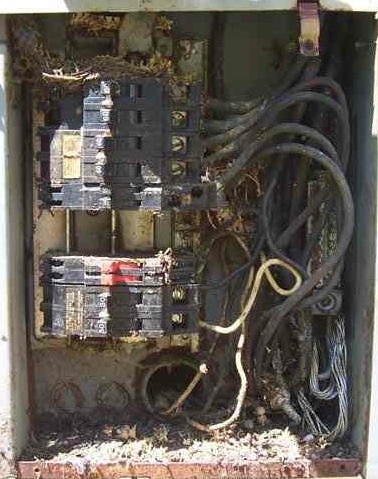
  An unfortunate snake entered this serice panel and was electrocuted. The resulting mess may make the components defective.
Safety 

Many people, even experienced electricians, have been killed or seriously injured while opening electrical panels. In 1991, an Atlanta electrician was killed while attempting to inspect a panel that had a faulty spring-loaded bus-bar assembly. Apparently, the bus-bar was moved while the electrician was opening the panel, causing an arc and a lethal electrical explosion. Generally, two factors contribute to these situations:  defective components and complacency.

Inspectors must be aware that all forms of electrical inspections, especially electrical panel inspections, are inherently dangerous. Practice calm, steady movements and learn to avoid distractions. A sudden flash, shout or movement could cause an inspector to lunge and touch an electrically live and dangerous component. Advise your client that they should never remove an electrical panel cover themselves, as they should leave this duty to InterNACHI inspectors or qualified electricians. Before touching the electrical panel, inspectors should ask themselves the following questions:
  • Do I have an escape path? Make sure that you know where you can safely turn or step if you must safely escape a dangerous surprise, such as bees or sparks. An unfortunately placed shovel or extension cord, for instance, can turn a quick jerk into a dangerous fall.
  • Are the floors wet? Never touch any electrical equipment while standing on a wet surface!
  • Does the panel appear to be wet? Check overhead for dripping water that has condensed on a cold water pipe. Moisture can arrive in more ways than you can imagine.
  • Is the panel rusty? Rust is an indication of previous wet conditions that may still exist.

As an optional safety measure, use a voltage ticker to make sure the box is safe to touch. If the alarm sounds on the device, have the box examined by a qualified electrician. Also, safety glasses and other personal protective equipment may be used to protect against burns and electric shock.

While removing the panel cover, inspectors should:

  • Stand a little back while removing the cover, which makes it easier to remain in a blocking position.
  • Stand so as to block your client from touching the panel and its components.
  • inform the client that opening the panel is a dangerous step, and that if sparks fly, the client should not touch the inspector.

Service Panel Inspection

Inspectors can check for the following defective conditions during an electrical panel inspection:

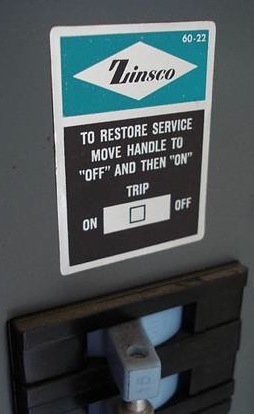
  • insufficient clearance. According to the 2008 National Electrical Code, most residential electrical panels require at least a 3-foot clearance or working space in front, 30 inches of width, and a minimum headroom clearance of 6 feet, or the height of the equipment, Zinsco panels are believed by many experts to be defectivewhichever is greater. If obstacles would make it unsafe for you to inspect the service panel, you have the right to disclaim it.
  • aluminum branch wiring.
  • sharp-tipped panel box screws or wires damaged by these screws. Panel box cover screws must have blunt ends so they do not pierce the wires inside the box. Look for wires that pass too closely to the screw openings inside the electrical panel.
  • circuit breakers that are not properly sized.
  • oxidation or corrosion to any of the parts. Oxidized or corroded wires will increase the resistance of conductors and create the potential for arcing.
  • damage caused by rodents. Rodents have been known to chew through wire insulation in electrical panels (and other areas), creating an unsafe condition. Rodents have been electrocuted this way, leaving an unsightly mess inside the panel.
  • evidence of electrical failures, such as burned or overheated components.
  • evidence of water entry inside the electrical panel. Moisture can corrode circuit breakers so that they won’t trip, make connections less reliable, and make the equipment unsafe to touch.
  • evidence of missing or improper bonding.  This may indicate improper wiring, damaged equipment or unsafe conditions.
  • the physical contact points of the overcurrent protection device to the contact point of the buss are not making good contact. The sounds of arcing (a cracking or popping sound) may indicate this condition.
  • panel manufactured by Zinsco or Federal Pacific Electric (FPE). These panels have a reputation for being problematic and further evaluation by a qualified electrician is recommended. Zinsco panels can generally be identified by a blue and silver “Zinsco” label inside the panel, and an embossed “Magnetrip” label at the top of the panel face. FPE panels should include, if they were not removed, one of the following identifying labels:
    • Federal Electric
    • Federal Pacific Electric
    • Federal NOARC
    • Federal Pioneer
    • FPE
    • FPE-Stab-Lok
    • Stab-Lok
The following are links to articles published concerning the issues associated with FPE Panels:
http://codecheck.com/cc/ccimages/PDFs/FPE_2012.pdf
http://www.wmctv.com/story/25331328/wmc-the-investigators-breaker-breaker?autostart=true

Arc-Fault Circuit Interrupters (AFCIs)

Arc-Fault Circuit Interrupters (AFCIs)

by Nick Gromicko, Rob London and Kenton Shepard
Arc-fault circuit interrupters (AFCIs) are special types of electrical receptacles or outlets and circuit breakers designed to detect and respond to potentially dangerous electrical arcs in home branch wiring.
How do they work?
 
AFCIs function by monitoring the electrical waveform and promptly opening (interrupting) the circuit they serve if they detect changes in the wave pattern that are characteristic of a dangerous arc. They also must be capable of distinguishing safe, normal arcs, such as those created when a switch is turned on or a plug is pulled from a receptacle, from arcs that can cause fires. An AFCI can detect, recognize, and respond to very small changes in wave pattern.
What is an arc?
 
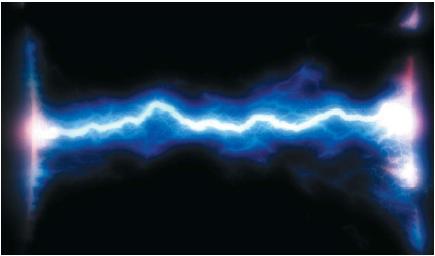
When an electric current crosses an air gap from an energized component to a grounded component, it produces a glowing plasma discharge known as an arc. For example, a bolt of lightening is a very large, powerful arc that crosses an atmospheric gap from an electrically charged cloud to the ground or another cloud. Just as lightning can cause fires, arcs produced by domestic wiring are capable of producing high levels of heat that can ignite their surroundings and lead to structure fires.
According to statistics from the National Fire Protection Agency for the year 2005, electrical fires damaged approximately 20,900 homes, killed 500 people, and cost $862 million in property damage. Although short-circuits and overloads account for many of these fires, arcs are responsible for the majority and are undetectable by traditional (non-AFCI) circuit breakers.
Where are arcs likely to form?
 
Arcs can form where wires are improperly installed or when insulation becomes damaged. In older homes, wire insulation tends to crystallize as it ages, becoming brittle and prone to cracking and chipping. Damaged insulation exposes the current-carrying wire to its surroundings, increasing the chances that an arc may occur.
Situations in which arcs may be created:

  • electrical cords damaged by vacuum cleaners or trapped beneath furniture or doors.
  • damage to wire insulation from nails or screws driven through walls.
  • appliance cords damaged by heat, natural aging, kinking, impact or over-extension.
  • spillage of liquid.
  • loose connections in outlets, switches and light fixtures.
Where are AFCIs required?
 
Locations in which AFCIs are required depend on the building codes adopted by their jurisdiction. Inspectors are responsible for knowing what building codes are used in the areas in which they inspect.
The 2006 International Residential Code (IRC) requires that AFCIs be installed within bedrooms in the following manner:

E3802.12 Arc-Fault Protection of Bedroom Outlets. All branch circuits that supply120-volt, single-phase, 15- and 20-amp outlets installed in bedrooms shall be protected by a combination-type or branch/feeder-type arc-fault circuit interrupter installed to provide protection of the entire branch circuit.

Exception: The location of the arc-fault circuit interrupter shall be permitted to be at other than the origination of the branch circuit, provided that:
  1. The arc-fault circuit interrupter is installed within 6 feet of the branch circuit overcurrent device as measured along the branch circuit conductors, and
  2. The circuit conductors between the branch circuit overcurrent device and the arc-fault circuit interrupter are installed in a metal raceway or a cable with metallic sheath.
The National Electrical Code (NEC) offers the following guidelines concerning AFCI placement within bedrooms:
Dwelling Units. All 120-volt, single phase, 15- and 20-ampere branch circuits supplying outlets installed in dwelling unit in family rooms, dining rooms, living rooms, parlors, libraries, dens, sun rooms, recreation rooms, closets, hallways, or similar rooms or areas shall be protected by a listed arc-fault circuit interrupter, combination-type installed to provide protection of the branch circuit.
Home inspectors should refrain from quoting exact code in their reports. A plaintiff’s attorney might suggest that code quotation means that the inspector was performing a code inspection and is therefore responsible for identifying all code violations in the home.  Some jurisdictions do not yet require their implementation in locations where they can be helpful.
What types of AFCIs are available?
AFCIs are available as circuit breakers for installation in the electrical distribution panel.

Nuisance Tripping

An AFCI might activate in situations that are not dangerous and create needless power shortages. This can be particularly annoying when an AFCI stalls power to a freezer or refrigerator, allowing its contents to spoil. There are a few procedures an electrical contractor can perform in order to reduce potential “nuisance tripping,” such as:
  • Check that the load power wire, panel neutral wire and load neutral wire are properly connected.
  • Check wiring to ensure that there are no shared neutral connections.
  • Check the junction box and fixture connections to ensure that the neutral conductor contacts a grounded conductor.
Arc Faults vs. Ground Faults
 
It is important to distinguish AFCI devices from Ground Fault Circuit Interrupter (GFCI) devices. GFCIs detect ground faults, which occur when current leaks from a hot (ungrounded) conductor to a grounded object as a result of a short-circuit. This situation can be hazardous when a person unintentionally becomes the current’s path to the ground. GFCIs function by constantly monitoring the current flow between hot and neutral (grounding) conductors, and activate when they sense a difference of 5 milliamps or more. Thus, GFCIs are intended to prevent personal injury due to electric shock, while AFCIs prevent personal injury and property damage due to structure fires.
In summary, AFCIs are designed to detect small arcs of electricity before they have a chance to lead to a structure fire.

Hot Water Recirculation Systems

Hot Water Recirculation Systems

by Nick Gromicko, Rob London and Kenton Shepard
A hot water recirculation system is a plumbing system that moves hot water to fixtures quickly without waiting for the water to get hot. Rather than relying on low water pressure, common in most water lines, recirculating systems rapidly move water from a water heater to the fixtures.
System Types
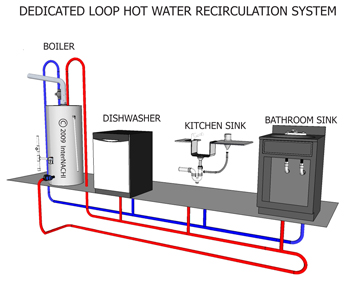
  • dedicated loop:  The circulation pump for this system is mounted on a pipe connected to the water heater tank down low. This is the cooler side of the loop, or the return.
    The hot water pipe is installed in a loop throughout the home, passing near each plumbing fixture. At each fixture, a short pipe connects the loop to the hot water valve. Because hot water is constantly circulating through the hot water loop, any time a valve is opened, it takes only a fraction of a second for hot water to reach the valve.
This helps extend the lifespan of the pump. If the home is not occupied, this pump will be probably be unplugged because the seller doesn’t want to pay for its operation in an empty house.  Dedicated loop hot water recirculation system
  • integrated loop:  This system is typically used on retrofits but may also be installed on new construction. It consists of a pump installed under the plumbing fixture farthest from the water heater. The pump contains a sensor which switches the pump on when water temperature drops below 85° F, and switches it off when water temperature reaches 95° F. Newer pumps are adjustable from 77° to 104° F.In this system, hot water is re-circulated intermittently. Hot water is returned to the water heater via the cold water pipes. This raises the temperature of the cold water slightly, but it returns to the usual cold temperature in a short time.
Activation Hot water recirculation systems are most commonly activated by either a thermostat or a timer. Systems that use a thermostat or timer automatically turn the pump on whenever the water temperature drops below a set point, or when the timer reaches a certain setting. These systems ensure that hot water is always available at the faucet.
Do they really save energy and water? Regardless of whether they are controlled manually or automatically, recirculation systems reduce the amount of water that goes down the drain while the homeowner waits for the desired temperature. This fact allows for the following three advantages over conventional water distribution systems:

  • They save time. Recirculating systems deliver hot water to faucets quickly, adding convenience for the homeowner.
  • They conserve water. According to statistics from the U.S. Department of Energy and the U.S. Census Bureau, between 400 billion and 1.3 trillion gallons of water (or close to 2 million Olympic-sized swimming pools) are wasted nationally by households per year while waiting for water to heat up.
  • They limit municipal energy waste. The DOE estimates that 800 to 1,600 kilowatt-hours per year are used to treat and pump the water to households that will eventually be wasted while the occupant waits for tap water to warm to the desired temperature.

If recirculation systems pump continuously, however, they have the potential to use significantly more energy. For a modest-sized pump, this might be 400 to 800 KWH a year if the pump runs all the time. Also, heat loss from the pipes can be significant if the hot water pipes are poorly insulated. This will result in the hot water heater running more. This added heat may be a benefit in the winter, but heat loss may add heat to the house in the summer and may result in higher bills for use of air conditioning.

Rebates

Some jurisdictions, particularly in areas where water is scarce, offer rebates on the purchase and installation of hot water recirculation systems. The cities of Santa Fe and Albuquerque, New Mexico, for instance, offer a $100 rebate for homeowners who purchase a hot water recirculation system. The city of Scottsdale, Arizona, offers up to $200 for residential property owners who install theses systems, although they must comply with UL-product and installation standards. Some systems may not comply with efficiency standards set by these municipalities.

Availability and Cost

Hot water recirculation systems are available nationwide from manufacturers, distributors, plumbing wholesale supply warehouses, and at selected retail home stores. The initial cost of dedicated systems may prevent some homeowners from installing these systems, as they require the purchase and installation of a pump and a large amount of piping. Integrated systems, by contrast, require only a pump and fittings. Energy savings will vary, depending on the design of the plumbing system, method of control and operation, and homeowner use. The system is easily installed and costs less than $400.

Inspection Considerations These systems all require an in-line air valve and shut-off valve. Other requirements will vary with the installation’s configuration, but may include a check valve and an additional shut-off valve.  The pump may be connected to a sensor with high and low temperature limits so that the pump circulates water through the loop only when the sensor calls for it. Inspections should be limited to the system’s proper operation.In summary, hot water redistribution systems are innovative plumbing systems that can save water and energy in certain circumstances.
Note:  The terms “dedicated” and “integrated” are descriptive terms invented for the purposes of this article. No universal, suitable terms were found to describe these system types during research.

Anti-Scald Valves

InterNACHI

Anti-Scald Valves

by Nick Gromicko and Rob London

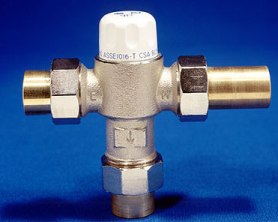
Anti-scald valves, also known as tempering valves and mixing valves, mix cold water in with outgoing hot water so that the hot water that leaves a fixture is not hot enough to scald a person. Anti-scald valves are used to regulate water temperature in buildings

Facts and Figures

  • Scalds account for 20% of all burns.
  • More than 2,000 American children are scalded each year, mostly in the bathroom and kitchen.
  • Scalding and other types of burns require costly and expensive hospital stays, often involving skin grafts and plastic surgery.
  • Scalding may lead to additional injuries, such as falls and heart attacks, especially among the elderly.
  • Water that is 160º F can cause scalding in 0.5 seconds.

Unwanted temperature fluctuations are an annoyance and a safety hazard. When a toilet is flushed, for instance, cold water flows into the toilet’s tank and lowers the pressure in the cold-water pipes. If someone is taking a shower, they will suddenly feel the water become hotter as less cold water is available to the shower valve. By the same principle, the shower water will become colder when someone in the house uses the hot-water faucet. This condition is exacerbated by plumbing that’s clogged, narrow, or installed in showers equipped with low-flow or multiple showerheads. A sudden burst of hot water can cause serious burns, particularly in young children, who have thinner skin than adults. Also, a startling thermal shock – hot or cold – may cause a person to fall in the shower as he or she scrambles on the slippery surface to adjust the water temperature. The elderly and physically challenged are at particular risk.

Anti-scald valves mitigate this danger by maintaining water temperature at a safe level, even as pressures fluctuate in water supply lines. They look similar to ordinary shower and tub valves and are equipped with a special diaphragm or piston mechanism that immediately balances the pressure of the hot- and cold-water inputs, limiting one or the other to keep the temperature within a range of several degrees. As a side effect, the use of an anti-scald valve increases the amount of available hot water, as it is drawn more slowly from the water heater. Inspectors and homeowners may want to check with the authority having jurisdiction (AHJ) to see if these safety measures are required in new construction in their area.

Installation of anti-scald valves is typically simple and inexpensive. Most models are installed in the hot-water line and require a cold-water feed. They also require a swing check valve on the cold-water feed line to prevent hot water from entering the cold-water system. They may be installed at the water heater to safeguard the plumbing for the whole building, or only at specific fixtures.

The actual temperature of the water that comes out of the fixture may be somewhat different than the target temperature set on the anti-scald valve. Such irregularities may be due to long, uninsulated plumbing lines or defects in the valve itself. Users may fine-tune the valve with a rotating mechanism that will allow the water to become hotter or colder, depending on which way it’s turned. Homeowners may contact an InterNACHI inspector or a qualified plumber if they have further questions or concerns.

In summary, anti-scald valves are used to reduce water temperature fluctuations that may otherwise inconvenience or harm unsuspecting building occupants.

Rodent Inspection

Rodent Inspection

by Nick Gromicko and Elise London

Rodents are a problem not just because they can destroy personal property and create problems with a home’s structure, but also because they can spread serious diseases to humans and their pets. Rodent-borne disease may be spread directly — by touching rodents or their Rat in a PVC pipeurine, feces or saliva — or indirectly — by coming into contact with fleas or other insects that have fed on an infected rodent host. Inspectors should use extreme caution and wear appropriate personal protective equipment when entering a home that is known to be infested with rodents.
Some diseases resulting from direct contact with mice and rats include:
  • hantavirus pulmonary syndrome;
  • hemorrhagic fever with renal; syndrome;
  • Lassa fever;
  • leptospirosis;
  • lymphocytic chorio-meningitis;
  • plague;
  • rat-bite fever;
  • salmonellosis;
  • South American arenaviruses; and
  • tularemia.
Some diseases resulting from indirect contact with mice and rats include:
  • babesiosis;
  • Colorado tick fever;
  • human granulocytic anaplasmosis;
  • lyme disease;
  • murine typhus;
  • scrub typhus;
  • rickettsialpox;
  • relapsing fever; and
  • Rocky Mountain spotted fever.

Rodents also pose a danger to the integrity of the structures they inhabit. They have strong teeth and they may chew through structures to gain access to food sources. The best method for preventing exposure to rodents is to prevent rodent infestation in the first place, according to the Centers for Disease Rodent trapControl (CDC) and the U.S. Environmental Protection Agency (EPA).
How can you tell that a home is infested?
Actual rodent sightings in the home are a good indicator that a severe infestation may be in progress.  Mild cases of infestation might not result in actual rodent sightings.
Indicators of an infestation are:
  • chewing or clawing sounds that come from inside or outside a home. Noises may even come from the roof, as tree-dwelling rodents may try to gain access to a home from above the living space;
  • stale smells coming from hidden areas;
  • evidence of structural damage that can provide entry points into the home;
  • evidence of gnawing and chewing on food packaging;
  • nesting material found in small piles, such as shredded paper, fabric or dried plant matter; and
  • rodent droppings anywhere in the home, especially near food packages in drawers and cupboards, and under the sink.
How can rodent infestation be prevented?
The following measures can be taken to eliminate rodents’ food sources, according to the CDC:
  • Keep food in thick plastic or metal containers with tight-fitting lids.
  • Clean up spilled food right away, and wash dishes and cooking utensils soon after use.
  • Keep outside cooking areas and grills clean.
  • Always put pet food away after use and do not leave pets’ food or water bowls out overnight.
  • Keep bird feeders away from the house.  Utilize squirrel guards to limit access to the feeder by squirrels and other rodents.
  • Use thick plastic or metal garbage cans with tight-fitting lids.
  • Keep compost bins as far away from the house as possible.
  • Dispose of trash and garbage on a frequent and regular basis, and eliminate clutter in and around the property to discourage nesting.
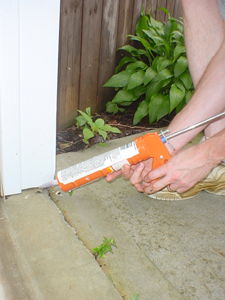
Mice can squeeze through a hole the size of a nickel, and rats can squeeze through a hole the size of a half dollar, according to the CDC. Consequently, smaller gaps may be filled cheaply and easily with steel wool and caulk may be used to seal it in place. Larger gaps and holes may be filled with lath screen or lath metal, cement, hardware cloth or metal sheeting.
Common places where gaps may be found inside the home are:
  • inside, under and behind kitchen cabinets, refrigerators and stoves;
  • inside closets near the floor’s corners;
  • around the fireplace;
  • around doors;
  • around plumbing pipes under sinks and washing machines;
  • around the piping for hot water heaters and furnaces;
  • around floor vents and dryer vents;
  • inside the attic;
  • in the basement or crawlspace;
  • near the basement and laundry room floor drains; and
  • between the floor and wall juncture.
Common places where gaps may be found outside the home are:
Any potential nesting sites outside the home should be eliminated. Elevate hay, woodpiles and garbage cans at least 1 foot off the ground. Move woodpiles far away from the house. Get rid of old trucks, cars and old tires that mice and rats could use as homes. Keep grass cut short, and keep shrubbery within 100 feet of the home well-trimmed.
What should be done if a house is found to be infested with rodents?
It is important to stay away from rodents, and to protect children and pets from direct and indirect contact if they are found in the home. Droppings should be handled only with extreme caution, even if they have dried. A face mask and gloves should be worn if handling and cleaning up these droppings because disturbing fecal particles may precipitate airborne contaminants. Affected areas should be sterilized after the droppings have been removed.All holes, cracks, and gaps in a home should be sealed to keep out rodents
In mild cases of infestation, homeowners may choose to eliminate the rodents themselves. They should make sure to take preventative measures while doing so.  To remove rodents, homeowners will need to use traps or rodenticides.
Some different types of traps include:
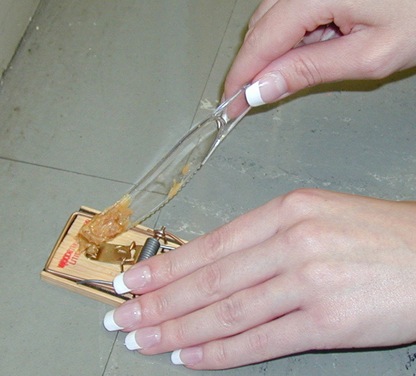
  • lethal traps, such as snap traps, that are designed to trap and kill rodents;
  • live traps, such as cage-type traps, that capture rodents alive and unharmed, requiring that the rodents then be released or killed; and
  • glue boards, which are low-cost devices that use sticky substances to trap rodents, requiring a further decision regarding disposal, since such traps are not lethal.
Traps should be set in any area where there is evidence of frequent rodent activity. Some rodents, particularly rats, are very cautious and several days may pass before they approach the traps. Other rodents, such as house mice and deer mice, are less cautious and may be trapped more quickly. Glue traps and live traps may scare mice that are caught live, causing them to urinate. This may increase a homeowner’s risk of being exposed to diseases, since the rodent urine may contain germs or disease-borne pathogens.Rodenticides are products intended to kill rodents, and are typically sold as powders in bait and tracking form.  Some rodenticides include:
  • baits, which combine rodenticides with food to attract rodents.  They may be formulated as blocks or paste and may be enclosed in a bait station;
  • tracking powders, which are rodenticides combined with a powdery material.  The powder sticks to the rodents’ feet and fur and is swallowed when the animals groom themselves.  After consuming the chemical poison contained in the bait or tracking powder, the rodents die.  Some rodenticides (including tracking powders) may be legally applied only by certified pesticide applicators because they may pose a risk to human health.
The following measures should be observed when an infestation is being eliminated:
  • Traps and baits should be placed in areas where children and pets cannot reach them.
  • Products should be used according to the label’s directions and precautions.
  • Only traps that are appropriate to the type and size of the targeted rodent should be used.
  • Glue boards should be placed in dry, dust-free areas, as moisture and dust will reduce their effectiveness.

It is advisable to contact a professional exterminator to deal with more severe infestations, since rodents reproduce constantly and quickly.

In summary, rodent infestation poses a serious risk to human health, and extreme caution must be taken when eliminating the problem.