Author Archives: bwisnewski

Aluminum Wiring

Aluminum Wiring

by Nick Gromicko, Rob London and Kenton Shepard
 
Between approximately 1965 and 1973, single-strand aluminum wiring was sometimes substituted for copper branch-circuit wiring in residential electrical systemsAluminum and copper wiring, with each metal clearly identifiable by its color due to the sudden escalating price of copper. After a decade of use by homeowners and electricians, inherent weaknesses were discovered in the metal that lead to its disuse as a branch wiring material. Although properly maintained aluminum wiring is acceptable, aluminum will generally become defective faster than copper due to certain qualities inherent in the metal. Neglected connections in outlets, switches and light fixtures containing aluminum wiring become increasingly dangerous over time. Poor connections cause wiring to overheat, creating a potential fire hazard. In addition, the presence of single-strand aluminum wiring may void a home’s insurance policies. Inspectors may instruct their clients to talk with their insurance agents about whether the presence of aluminum wiring in their home is a problem that requires changes to their policy language.
 
Facts and Figures
  • On April, 28, 1974, two people were killed in a house fire in Hampton Bays, New York. Fire officials determined that the fire was caused by a faulty aluminum wire connection at an outlet.
  • According to the Consumer Product Safety Commission (CPSC), “Homes wired with aluminum wire manufactured before 1972 [‘old technology’ aluminum wire] are 55 times more likely to have one or more connections reach “Fire Hazard Conditions” than is a home wired with copper.”
Aluminum as a Metal

Aluminum possesses certain qualities that, compared with copper, make it an undesirable material as an electrical conductor. These qualities all lead to loose connections, where fire hazards become likely. These qualities are as follows:

  • higher electrical resistance. Aluminum has a high resistance to electrical current flow, which means that, given the same amperage, aluminum conductors must be of a larger diameter than would be required by copper conductors.
  • less ductile. Aluminum will fatigue and break down more readily when subjected to bending and other forms of abuse than copper, which is more ductile. Fatigue will cause the wire to break down internally and will increasingly resist electrical current, leading to a buildup of excessive heat.
  • galvanic corrosion.  In the presence of moisture, aluminum will undergo galvanic corrosion when it comes into contact with certain dissimilar metals.
  • oxidation. Exposure to oxygen in the air causes deterioration to the outer surface of the wire. This process is called oxidation. Aluminum wire is more easily oxidized than copper wire, and the compound formed by this process – aluminum oxide – is less conductive than copper oxide. As time passes, oxidation can deteriorate connections and present a fire hazard.
  • greater malleability. Aluminum is soft and malleable, meaning it is highly sensitive to compression. After a screw has been over-tightened on aluminum wiring, for instance, the wire will continue to deform or “flow” even after the tightening has ceased. This deformation will create a loose connection and increase electrical resistance in that location.
  • greater thermal expansion and contraction. Even more than copper, aluminum expands and contracts with changes in temperature. Over time, this process will cause connections between the wire and the device to degrade. For this reason, aluminum wires should never be inserted into the “stab,” “bayonet” or “push-in” type terminations found on the back of many light switches and outlets.
  • excessive vibration. Electrical current vibrates as it passes through wiring. This vibration is more extreme in aluminum than it is in copper, and, as time passes, it can cause connections to loosen.

Identifying Aluminum Wiring

  • Aluminum wires are the color of aluminum and are easily discernible from copper and other metals.
  • Since the early 1970s, wiring-device binding terminals for use with aluminum wire have been marked CO/ALR, which stands for “copper/aluminum revised.”
  • Look for the word “aluminum” or the initials “AL” on the plastic wire jacket. Where wiring is visible, such as in the attic or electrical panel, inspectors can look for printed or embossed letters on the plastic wire jacket. Aluminum wire may have the word “aluminum,” or a specific brand name, such as “Kaiser Aluminum,” marked on the wire jacket. Where labels are hard to read, a light can be shined along the length of the wire.
  • When was the house built? Homes built or expanded between 1965 and 1973 are more likely to have aluminum wiring than houses built before or after those years.

Options for Correction

Aluminum wiring should be evaluated by a qualified electrician who is experienced in evaluating and correcting aluminum wiring problems. Not all licensed electricians are properly trained to deal with defective aluminum wiring. The CPSC recommends the following two methods for correction for aluminum wiring:

  • Rewire the home with copper wire. While this is the most effective method, rewiring is expensive and impractical, in most cases.
  • Use copalum crimps. The crimp connector repair consists of attaching a piece of copper wire to the existing aluminum wire branch circuit with a specially designed metal sleeve and powered crimping tool. This special connector can be properly installed only with the matching AMP tool. An insulating sleeve is placed around the crimp connector to complete the repair. Although effective, they are expensive (typically around $50 per outlet, switch or light fixture).

Although not recommended by the CPSC as methods of permanent repair for defective aluminum wiring, the following methods may be considered:

  • application of anti-oxidant paste. This method can be used for wires that are multi-stranded or wires that are too large to be effectively crimped.
  • pigtailing. This method involves attaching a short piece of copper wire to the aluminum wire with a twist-on connector. the copper wire is connected to the switch, wall outlet or other termination device. This method is only effective if the connections between the aluminum wires and the copper pigtails are extremely reliable. Pigtailing with some types of connectors, even though Underwriters Laboratories might presently list them for the application, can lead to increasing the hazard. Also, beware that pigtailing will increase the number of connections, all of which must be maintained. Aluminum Wiring Repair (AWR), Inc., of Aurora, Colorado, advises that pigtailing can be useful as a temporary repair or in isolated applications, such as the installation of a ceiling fan.
  • CO/ALR connections. According to the CPSC, these devices cannot be used for all parts of the wiring system, such as ceiling-mounted light fixtures or permanently wired appliances and, as such, CO/ALR connections cannot constitute a complete repair. Also, according to AWR, these connections often loosen over time.
  • alumiconn. Although AWR believes this method may be an effective temporary fix, they are wary that it has little history, and that they are larger than copper crimps and are often incorrectly applied.
  • Replace certain failure-prone types of devices and connections with others that are more compatible with aluminum wire.
  • Remove the ignitable materials from the vicinity of the connections.

In summary, aluminum wiring can be a fire hazard due to inherent qualities of the metal. Inspectors should be capable of identifying this type of wiring.




Aging in Place

InterNACHI

Aging in Place

by Nick Gromicko and Rob London 
“Aging in place” is the phenomenon describing senior citizens‘ ability to live independently in their homes for as long as possible. Those who age in place will not have to move from their present residence in order to secure necessary support services in response to their changing needs.

The Baby Boomers

As the baby boomers age, the 60+ population will spike from roughly 45 million in recent years to more than 70 million by 2020. Research shows that baby boomers’ expectations of how they will receive care differ from that of their parents’ generation.  Overwhelmingly, they will seek care in their own homes and will be less likely to move into congregate living settings.

Why do many senior citizens prefer to age in place?

Nursing homes, to many, represent a loss of freedom and a reduced quality of life. Here are a few good reasons why these fears are justified:

  • In 2007, inspectors received 37,150 complaints about conditions in nursing homes. Roughly one-fifth of the complaints verified by federal and state authorities involved the abuse or neglect of patients. Specific problems included infected bedsores, medication mix-ups, poor nutrition, and other forms of neglect.
  • The proportion of nursing homes cited for deficiencies ranged from 76% in Rhode Island to as high as 100% in Alaska, Idaho, Wyoming and Washington, D.C.
  • Many cases have been exposed in which nursing homes billed Medicare and Medicaid for services that were not provided.
  • A significant percentage of nursing homes had deficiencies that caused immediate jeopardy or actual harm to patients.

Aging-in-Place Inspections 

Inspectors may recommend corrections and adaptations to the home to improve maneuverability, accessibility, and safety for elderly occupants. Some such alterations and recommendations for a home are as follows:

Appliances

    • microwave oven in wall or on counter;
    • refrigerator and freezer side by side;
    • side-swing or wall oven;
    • controls that  are easy to read;
    • raised washing machine and dryer;
    • front-loading washing machines;
    • raised dishwasher with push-button controls;
    • stoves having electric cooktops with level burners for safely transferring between the burners; front controls and downdraft feature to pull heat away from user; light to indicate when surface is hot; and
    • replace old stoves with induction cooktops to help prevent burns.

Bathroom

    • fold-down seat installed in the shower;
    • adjustable showerheads with 6-foot hose;
    • light in shower stall;
    • wall support, and provision for adjustable and/or varied-height counters and removable base cabinets;
    • contrasting color edge border at countertops;
    • at least one wheelchair-maneuverable bath on main level;
    • bracing in walls around tub, shower, shower seat and toilet for installation of grab bars;
    • if stand-up shower is used in main bath, it is curbless and wide;
    • low bathtub;
    • toilet higher than standard toilet, or height-adjustable;
    • design of the toilet paper holder allows rolls to be changed with one hand;
    • wall-hung sink with knee space and panel to protect user from pipes; and
    • slip-resistant flooring in bathroom and shower.

Counters

    • base cabinet with roll-out trays;
    • pull-down shelving;
    • wall support, and provision for adjustable and/or varied-height counters and removable base cabinets;
    • upper wall cabinetry lower than conventional height;
    • accented stripes on edge of countertops to provide visual orientation to the workspace;
    • counter space for dish landing adjacent to or opposite all appliances;
    • glass-front cabinet doors; and
    • open shelving for easy access to frequently used items.

Exterior

    • low-maintenance exterior (vinyl, brick, etc); and
    • low-maintenance shrubs and plants.

Entry

    • sensor light at exterior no-step entry focusing on the front-door lock;
    • non-slip flooring in foyer;
    • accessible path of travel to the home;
    • at least one no-step entry with a cover;
    • entry door sidelight or high/low peep hole viewer; sidelight should provide both privacy and safety;
    • doorbell in accessible location; and
    • a surface on which to place packages while opening door.

Electrical, Lighting, Safety and Security

    • install new smoke and CO detectors;
    • install automated lighting, an emergency alert system, or a video-monitoring system;
    • easy-to-see and read thermostats;
    • light switches by each entrance to halls and rooms;
    • light receptacles with at least two bulbs in vital places (exits, bathroom);
    • light switches, thermostats and other environmental controls placed in accessible locations no higher than 48 inches from floor;
    • move electrical cords out of the flow of traffic;
    • replace standard light switches with rocker or touch-light switches; and
    • pre-programmed thermostats.

Faucets

    • thermostatic or anti-scald controls;
    • lever handles or pedal-controlled; and
    • pressure-balanced faucets.

Flooring

    • if carpeted, use low-density with firm pad;
    • smooth, non-glare, slip-resistant surfaces, interior and exterior; and
    • color and texture contrast to indicate change in surface levels.

Hallways

    • wide;
    • well-lit; and
    • fasten down rugs and floor runners, and remove any that are not necessary.

Heating, Ventilation and Air Conditioning

    • install energy-efficient units;
    • HVAC should be designed so filters are easily accessible; and
    • windows that can be opened for cross-ventilation and fresh air.

Miscellaneous

    • 30-inch by 48-inch clear space at appliances, or 60-inch diameter clear space for turns;
    • multi-level work areas to accommodate cooks of different heights;
    • loop handles for easy grip and pull;
    • pull-out spray faucet;
    • levered handles;
    • in multi-story homes, laundry chute or laundry facilities in master bedroom;
    • open under-counter seated work areas; and
    • placement of task lighting in appropriate work areas.

Overall Floor Plan

    • main living on a single story, including full bath;
    • 5-foot by 5-foot clear turn space in living area, kitchen, a bedroom and a bathroom; and
    • no steps between rooms on a single level.

Reduced Maintenance and Convenience Features

    • easy-to-clean surfaces;
    • built-in recycling system;
    • video phones;
    • central vacuum;
    • built-in pet feeding system; and
    • intercom system.

Stairways, Lifts and Elevators

    • adequate hand rails on both sides of stairway;
    • residential elevator or lift; and
    • increased visibility of stairs through contrast strip on top and bottom stairs, and color contrast between treads and risers on stairs with use of lighting.

Storage

    • lighting in closets;
    • adjustable closet rods and shelves; and
    • easy-open doors that do not obstruct access.

Windows

    • plenty of windows for natural light;
    • low-maintenance exterior and interior finishes;
    • lowered windows, or taller windows with lower sill height; and
    • easy-to-operate hardware.

Advice for those who wish to age in place:

  • Talk with family members about your long-term living preferences. Do you want to downsize to a smaller single-family home, or do you plan to stay put in your traditional family home?
  • Take a look at your finances and retirement funds. With your current savings and assets, will you be able to pay for home maintenance? Consider starting a separate retirement savings account strictly for home maintenance.
  • Remodel your home before your mobility becomes limited. As you age, changes in mobility, hearing, vision and overall health and flexibility will affect how easily you function in your home. Consider making your home “age-friendly” as a phased-in and budgeted home improvement, rather than waiting until you need many modifications at a time due to a health crisis.
  • If you decide before you retire that you want to live in your current home through the remainder of life, consider paying for “big ticket – long life” home projects while you still have a healthy income. Such items may include having the roof assessed or replaced, replacing and upgrading the water heater or cooling unit, completing termite inspections and treatment, having a septic tank inspection and replacement, as needed, and purchasing a riding lawn mower.
  • InterNACHI advocates healthy living, as it plays a vital role in your ability to age in place. Most seniors leave their homes due to functional and mobility limitations that result from medical crises, and an inability to pay for support to stay with them in their home. Effectively managing health risks and maintaining a healthy lifestyle can help you stay strong, age well, and live long at your own home.
In summary, aging in place is a way by which senior citizens can avoid being dependent on others due to declining health and mobility.

Advantages of Solar Energy

Advantages of Solar Energy

by Nick Gromicko and Rob London
Solar energy offers considerable advantages over conventional energy systems by nullifying flaws in those systems long considered to be unchangeable. Solar power for home energy production has its flaws, too, which are outlined in another article, but they’re dwarfed by the advantages listed below.
Solar energy is a great choice
The following are advantages of solar energy:
  • Raw materials are renewable and unlimited. The amount of available solar energy is staggering — roughly 10,000 times that currently required by humans — and it’s constantly replaced. A mere 0.02% of incoming sunlight, if captured correctly, would be sufficient to replace every other fuel source currently used.

Granted, the Earth does need much of this solar energy to drive its weather, so let’s look only at the unused portion of sunlight that is reflected back into space, known as the albedo. Earth’s average albedo is around 30%, meaning that roughly 52 petawatts of energy is reflected by the Earth and lost into space every year. Compare this number with global energy-consumption statistics.  Annually, the energy lost to space is the combined equivalent of 400 hurricanes, 1 million Hoover Dams, Great Britain’s energy requirement for 250,000 years, worldwide oil, gas and coal production for 387 years, 75 million cars, and 50 million 747s running perpetually for one year (not to mention 1 million fictional DeLorean time machines!).

  • Solar power is low-emission. Solar panels produce no pollution, although they impose environmental costs through manufacture and construction. These environmental tolls are negligible, however, when compared with the damage inflicted by conventional energy sources:  the burning of fossil fuels releases roughly 21.3 billion metric tons of carbon dioxide into the atmosphere annually.
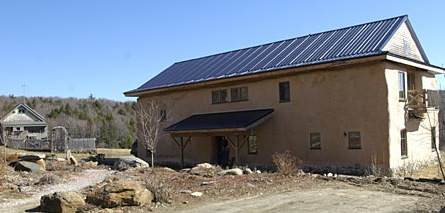
  • Solar power is suitable for remote areas that are not connected to energy grids. It may come as a surprise to city-dwellers but, according to Home Power Magazine, as of 2006, 180,000 houses in the United States were off-grid, and that figure is likely considerably higher today. California, Colorado, Maine, Oregon, Vermont and Washington have long been refuges for such energy rebels, though people live off the grid in every state. While many of these people shun the grid on principle, owing to politics and environmental concerns, few of the world’s 1.8 billion off-the-gridders have any choice in the matter. Solar energy can drastically improve the quality of life for millions of people who live in the dark, especially in places such as Sub-Saharan Africa, where as many as 90% of the rural population lacks access to electricity. People in these areas must rely on fuel-based lighting, which inflicts significant social and environmental costs, from jeopardized health through Rural, off-grid homes are excellent applications for solar powercontamination of indoor air, to limited overall productivity.
  • Solar power provides green jobs. Production of solar panels for domestic use is becoming a growing source of employment in research, manufacture, sales and installation.
  • Solar panels contain no moving parts and thus produce no noise. Wind turbines, by contrast, require noisy gearboxes and blades.
  • In the long run, solar power is economical. Solar panels and installation involve high initial expenses, but this cost is soon offset by savings on energy bills.  Eventually, they may even produce a profit on their use.
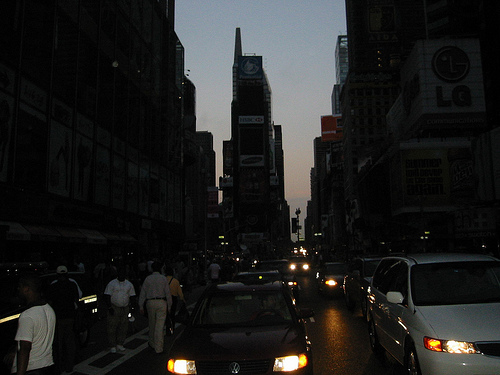
  • Solar power takes advantage of net metering, which is the practice of crediting homeowners for electricity they produce and return to the power grid. As part of the Energy Policy Act of 2005, public electric utilities are required to make available, upon request, net metering to their Manhattan, and much of the northeast USA, goes dark in August, 2003customers. This practice offers an advantage for homeowners who use solar panels (or wind turbines or fuel cells) that may, at times, produce more energy than their homes require. If net metering is not an option, excess energy may be stored in batteries.
  • Solar power can mean government tax credits. U.S. federal subsidies credit up to 30% of system costs, and each state offers its own incentives. California, blessed with abundant sunshine and plagued by high electric rates and an over-taxed grid, was the first state to offer generous renewable-energy incentives for homes and businesses.
  • Solar power is reliable. Many homeowners favor solar energy because it is virtually immune to potential failings of utility companies, mainly in the form of political or economic turmoil, terrorism, natural disasters, or brownouts due to overuse. The Northeast Blackout of 2003 unplugged 55 million people across two countries, while rolling blackouts are a part of regular life in some South Asian countries, and occasionally in California and Texas.
  • Solar power conserves foreign energy expenditures. In many countries, a large percentage of earnings is used to pay for imported oil for power generation. The United States alone spends $13 million per hour on oil, much of which comes from Persian Gulf nations. As oil supplies dwindle and prices rise in this politically unstable region, these problems continue to catalyze the expansion of solar power and other alternative-energy systems.
In summary, solar energy offers advantages to conventional fossil fuels and other renewable energy systems.

Thermostats

Thermostats

by Nick Gromicko and Rob London
Thermostats are devices designed to control the heating and cooling systems in a building so that air temperature remains comfortable. According to InterNACHI’s Standards of Practice, inspectors are not required to verify, inspect or determine thermostat calibration, heat anticipation, automatic setbacks, timers, programs or clocks. It is wise, however, for inspectors to understand thermostat operation and solutions to common defects.Thermostats are used to control heating and cooling cycles

Thermostats can be manually controlled or set to activate automatically based on timers or room temperature readings. Most thermostats contain two meters:  the “set” temperature that the thermostat is asking for, and the actual temperature. On a traditional dial-type thermostat, the user can increase the set temperature by rotating the dial clockwise, and lower it by rotating it counter-clockwise. Newer thermostats usually have digital displays, which can be used to adjust automated  heating and cooling schedules.

Thermostat Location

In order to avoid false or “ghost” readings, which will cause unnecessary furnace or air-conditioner cycling, the thermostat must be installed so that it correctly reads the room temperature. The following locations may cause the thermostat to give false readings:

  • near a heat source, such as a fireplace, hot water pipes, bright lights, direct sunlight, electrical appliances that produce heat;
  • in a drafty hallway, or near a window or exterior door that is opened often; and
  • on an outside wall. Outside walls are too affected by outside temperatures, which may make the thermostat “think” the air in the house is warmer or cooler than it really is.
Common Thermostat Problems and Solutions
  • erratic operation or fluctuating temperature. This is often caused by poor pin connections between the thermostat and the backplate when the backplate is flexed against an uneven wall. To allow the backplate to flatten out, loosen the screws that attach the backplate to the wall, then snap the thermostat back onto the backplate.
  • a thermostat that doesn’t respond to changes in room temperature. This can happen when there is air passing over the temperature sensor from a hole in the wall behind the thermostat, through which wires enter from the air-handling unit. To rectify this, insulate the hole behind the thermostat with insulation, spray foam, or any other insulating material.
  • temperature that is inaccurate. A convenient way to test the temperature sensor is to tape a thermometer to the wall next to the thermostat and wait 15 minutes. A faulty thermometer needs to be recalibrated. Instructions for recalibration vary by manufacturer.
  • loss of power. This may be caused by the following two situations:
    • If the air handler powers the thermostat, check the circuit breaker meant for the air handler and make sure it has not tripped.
    • If batteries power the thermostat, make sure they are lithium, not alkaline. Alkaline batteries will die rapidly or cause erratic thermostat operation.

Maintenance and Other Tips

  • Give the thermostat’s interior a light dusting with a small, soft paintbrush. Canned air can also be used to blow off dust. Twist the screws to remove the cover. Be sure to clean the contacts, which are small metal plates within the unit. The wires coming from the transformer attach to the contacts. Do not touch any of the interior parts with fingers.
  • If the base is loose, re-tighten the screws. Check the wires coming from the transformer. If any corrosion is present, remove the wire from the contact and clean it. Use a wire stripper to remove the surrounding insulation, cut back the wire, and reconnect it.
  • Make sure the terminal screws are tight.
  • For wireless thermostats, make sure the model number of the thermostat matches the model number of the receiver. If the model numbers do not match, the stat and receiver will not be compatible.
  • Make sure that your thermostat has been set to the proper position for the season: cooling or heating. The air conditioner will not run with the switch set to “heating” and, conversely, the heating system won’t run if the thermostat has been set to “cooling.”
  • Thermostats that contain a mercury switch must remain perfectly level or they may not control the temperature setting.

A Few Notes on Energy Savings

  • Many people believe that furnaces work harder than normal to warm an area back up to a comfortable temperature, which will counteract energy savings gained from turning the thermostat down. This belief is a misconception that has been disproved by years of studies and research. Fuel is saved between the time the temperature is stabilized at the lower level and the next time heat is needed, while the fuel required to re-heat the space is roughly equal to the fuel saved while the building drops to a lower temperature.
  • According to the U.S. Department of Energy, consumers can save 10% on their utility bills by setting their thermostat back 10° to 15° for eight hours. This can be accomplished easily with a programmable thermostat.
  • Be careful not to set the thermostat so low in the winter that pipes freeze, or so low during the summer which may allow humidity-spawned mold to grow.
In summary, thermostats are used to ensure the comfort of building occupants through the proper control of the heating and cooling cycles.

10 Easy Ways to Save Energy in Your Home

10 Easy Ways to Save Energy in Your Home

by Nick Gromicko, Ben Gromicko, Rob London and Kenton Shepard 
Most people don’t know how easy it is to make their homes run on less energy, and here at InterNACHI, we want to change that. Drastic reductions in heating, cooling and electricity costs can be accomplished through very simple changes, most of which homeowners can do themselves. Of course, for homeowners who want to take advantage of the most up-to-date knowledge and systems in home energy efficiency, InterNACHI energy auditors can perform in-depth testing to find the best energy solutions for your particular home.

Why make your home more energy efficient? Here are a few good reasons:

  • Federal, state, utility and local jurisdictions’ financial incentives, such as tax breaks, are very advantageous for homeowners in most parts of the U.S.
  • It saves money. It costs less to power a home that has been converted to be more energy-efficient.
  • It increases the comfort level indoors.
  • It reduces our impact on climate change. Many scientists now believe that excessive energy consumption contributes significantly to global warming.
  • It reduces pollution. Conventional power production introduces pollutants that find their way into the air, soil and water supplies.

1. Find better ways to heat and cool your house. 

As much as half of the energy used in homes goes toward heating and cooling. The following are a few ways that energy bills can be reduced through adjustments to the heating and cooling systems:

  • Install a ceiling fan. Ceiling fans can be used in place of air conditioners, which require a large amount of energy.
  • Periodically replace air filters in air conditioners and heaters.
  • Set thermostats to an appropriate temperature. Specifically, they should be turned down at night and when no one is home. In most homes, about 2% of the heating bill will be saved for each degree that the thermostat is lowered for at least eight hours each day. Turning down the thermostat from 75° F to 70° F, for example, saves about 10% on heating costs.
  • Install a programmable thermostat. A programmable thermostat saves money by allowing heating and cooling appliances to be automatically turned down during times that no one is home and at night. Programmable thermostats contain no mercury and, in some climate zones, can save up to $150 per year in energy costs.
  • Install a wood stove or a pellet stove. These are more efficient sources of heat than furnaces.
  • At night, curtains drawn over windows will better insulate the room.

2. Install a tankless water heater.

Demand-type water heaters (tankless or instantaneous) provide hot water only as it is needed. They don’t produce the standby energy losses associated with traditional storage water heaters, which will save on energy costs. Tankless water heaters heat water directly without the use of a storage tank. When a hot water tap is turned on, cold water travels through a pipe into the unit. A gas burner or an electric element heats the water. As a result, demand water heaters deliver a constant supply of hot water. You don’t need to wait for a storage tank to fill up with enough hot water.

3. Replace incandescent lights.

The average household dedicates 11% of its energy budget to lighting. Traditional incandescent lights convert approximately only 10% of the energy they consume into light, while the rest becomes heat. The use of new lighting technologies, such as light-emitting diodes (LEDs) and compact fluorescent lamps (CFLs), can reduce the energy use required by lighting by 50% to 75%. Advances in lighting controls offer further energy savings by reducing the amount of time that lights are on but not being used. Here are some facts about CFLs and LEDs:

  • CFLs use 75% less energy and last about 10 times longer than traditional incandescent bulbs.
  • LEDs last even longer than CFLs and consume less energy.
  • LEDs have no moving parts and, unlike CFLs, they contain no mercury.

4. Seal and insulate your home.

Sealing and insulating your home is one of the most cost-effective ways to make a home more comfortable and energy-efficient, and you can do it yourself. A tightly sealed home can improve comfort and indoor air quality while reducing utility bills. An InterNACHI energy auditor can assess  leakage in the building envelope and recommend fixes that will dramatically increase comfort and energy savings.

The following are some common places where leakage may occur:

  • electrical receptacles/outlets;
  • mail slots;
  • around pipes and wires;
  • wall- or window-mounted air conditioners;
  • attic hatches;
  • fireplace dampers;
  • inadequate weatherstripping around doors;
  • baseboards;
  • window frames; and
  • switch plates.

Because hot air rises, air leaks are most likely to occur in the attic. Homeowners can perform a variety of repairs and maintenance to their attics that save them money on cooling and heating, such as:

  • Plug the large holes. Locations in the attic where leakage is most likely to be the greatest are where walls meet the attic floor, behind and under attic knee walls, and in dropped-ceiling areas.
  • Seal the small holes. You can easily do this by looking for areas where the insulation is darkened. Darkened insulation is a result of dusty interior air being filtered by insulation before leaking through small holes in the building envelope. In cold weather, you may see frosty areas in the insulation caused by warm, moist air condensing and then freezing as it hits the cold attic air. In warmer weather, you’ll find water staining in these same areas. Use expanding foam or caulk to seal the openings around plumbing vent pipes and electrical wires. Cover the areas with insulation after the caulk is dry.
  • Seal up the attic access panel with weatherstripping. You can cut a piece of fiberglass or rigid foamboard insulation in the same size as the attic hatch and glue it to the back of the attic access panel. If you have pull-down attic stairs or an attic door, these should be sealed in a similar manner.

5. Install efficient showerheads and toilets.

The following systems can be installed to conserve water usage in homes:

  • low-flow showerheads. They are available in different flow rates, and some have a pause button which shuts off the water while the bather lathers up;
  • low-flow toilets. Toilets consume 30% to 40% of the total water used in homes, making them the biggest water users. Replacing an older 3.5-gallon toilet with a modern, low-flow 1.6-gallon toilet can reduce usage an average of 2 gallons-per-flush (GPF), saving 12,000 gallons of water per year. Low-flow toilets usually have “1.6 GPF” marked on the bowl behind the seat or inside the tank;
  • vacuum-assist toilets. This type of toilet has a vacuum chamber that uses a siphon action to suck air from the trap beneath the bowl, allowing it to quickly fill with water to clear waste. Vacuum-assist toilets are relatively quiet; and
  • dual-flush toilets. Dual-flush toilets have been used in Europe and Australia for years and are now gaining in popularity in the U.S. Dual-flush toilets let you choose between a 1-gallon (or less) flush for liquid waste, and a 1.6-gallon flush for solid waste. Dual-flush 1.6-GPF toilets reduce water consumption by an additional 30%.

6. Use appliances and electronics responsibly.

Appliances and electronics account for about 20% of household energy bills in a typical U.S. home. The following are tips that will reduce the required energy of electronics and appliances:

  • Refrigerators and freezers should not be located near the stove, dishwasher or heat vents, or exposed to direct sunlight. Exposure to warm areas will force them to use more energy to remain cool.
  • Computers should be shut off when not in use. If unattended computers must be left on, their monitors should be shut off. According to some studies, computers account for approximately 3% of all energy consumption in the United States.
  • Use efficient ENERGY STAR-rated appliances and electronics. These devices, approved by the U.S. Department of Energy and the Environmental Protection Agency’s ENERGY STAR Program, include TVs, home theater systems, DVD players, CD players, receivers, speakers, and more. According to the EPA, if just 10% of homes used energy-efficient appliances, it would reduce carbon emissions by the equivalent of 1.7 million acres of trees.
  • Chargers, such as those used for laptops and cell phones, consume energy when they are plugged in. When they are not connected to electronics, chargers should be unplugged.
  • Laptop computers consume considerably less electricity than desktop computers.

7. Install daylighting as an alternative to electrical lighting.

Daylighting is the practice of using natural light to illuminate the home’s interior. It can be achieved using the following approaches:

  • skylights. It’s important that they be double-pane or they may not be cost-effective. Flashing skylights correctly is key to avoiding leaks;
  • light shelves. Light shelves are passive devices designed to bounce light deep into a building. They may be interior or exterior. Light shelves can introduce light into a space up to 2½ times the distance from the floor to the top of the window, and advanced light shelves may introduce four times that amount;
  • clerestory windows.  Clerestory windows are short, wide windows set high on the wall. Protected from the summer sun by the roof overhang, they allow winter sun to shine through for natural lighting and warmth; and
  • light tubes.  Light tubes use a special lens designed to amplify low-level light and reduce light intensity from the midday sun. Sunlight is channeled through a tube coated with a highly reflective material, and then enters the living space through a diffuser designed to distribute light evenly.

8. Insulate windows and doors.

About one-third of the home’s total heat loss usually occurs through windows and doors. The following are ways to reduce energy lost through windows and doors:

  • Seal all window edges and cracks with rope caulk. This is the cheapest and simplest option.
  • Windows can be weatherstripped with a special lining that is inserted between the window and the frame. For doors, apply weatherstripping around the whole perimeter to ensure a tight seal when they’re closed. Install quality door sweeps on the bottom of the doors, if they aren’t already in place.
  • Install storm windows at windows with only single panes. A removable glass frame can be installed over an existing window.
  • If existing windows have rotted or damaged wood, cracked glass, missing putty, poorly fitting sashes, or locks that don’t work, they should be repaired or replaced.

9. Cook smart.

An enormous amount of energy is wasted while cooking. The following recommendations and statistics illustrate less wasteful ways of cooking:

  • Convection ovens are more efficient that conventional ovens. They use fans to force hot air to circulate more evenly, thereby allowing food to be cooked at a lower temperature. Convection ovens use approximately 20% less electricity than conventional ovens.
  • Microwave ovens consume approximately 80% less energy than conventional ovens.
  • Pans should be placed on the matching size heating element or flame.
  • Using lids on pots and pans will heat food more quickly than cooking in uncovered pots and pans.
  • Pressure cookers reduce cooking time dramatically.
  • When using conventional ovens, food should be placed on the top rack. The top rack is hotter and will cook food faster.

10. Change the way you do laundry.

  • Do not use the medium setting on your washer. Wait until you have a full load of clothes, as the medium setting saves less than half of the water and energy used for a full load.
  • Avoid using high-temperature settings when clothes are not very soiled. Water that is 140° F uses far more energy than 103° F for the warm-water setting, but 140° F isn’t that much more effective for getting clothes clean.
  • Clean the lint trap every time before you use the dryer. Not only is excess lint a fire hazard, but it will prolong the amount of time required for your clothes to dry.
  • If possible, air-dry your clothes on lines and racks.
  • Spin-dry or wring clothes out before putting them into a dryer.
Homeowners who take the initiative to make these changes usually discover that the energy savings are more than worth the effort. InterNACHI home inspectors can make this process much easier because they can perform a more comprehensive assessment of energy-savings potential than the average homeowner can.