Author Archives: bwisnewski

Fire Safety for the Home

Fire Safety for the Home

by Nick Gromicko and Kate Tarasenko
The U.S. Fire Administration reports that more than 403,000 home fires occurred in the U.S. in 2008, causing 2,780 deaths and more than 13,500 injuries. Some fires are caused by issues related to the structure, such as lightning strikes, faulty wiring, furnace malfunctions, and other electrical and heating system-related mishaps.
 

But most home fires are preventable. According to an April 2010 report by the National Fire Protection Association, adults over the age of 75 are almost three times more likely to die in a home fire than the rest of the general public.  The NFPA’s fire prevention program promotes the following eight tips that elderly people – and people of all ages – can use.

1.  Plan and practice your escape from fire.

We’ve heard this advice before, but you can’t be prepared to act in an emergency if you don’t have a plan and everybody knows what that plan is.  Panic and fear can spread as quickly as a fire, so map out an escape route and a meeting place outdoors, and involve even the youngest family members so that everyone can work as a unit to make a safe escape.

If you live in a condo or apartment building, make sure you read the signs posted on your floor advising you of the locations of stairways and other exits, as well as alarm pull stations and fire extinguishers.

2.  Plan your escape around your abilities.

Keeping a phone by your bedside will allow you to call 911 quickly, especially if the exits of your home are blocked by smoke or flames.  Keep a pair of shoes near your bed, too.  If your home or building has a fire escape, take some time to practice operating it and climbing it.

3.  Smoke alarms save lives.

If you don’t already have permanently installed smoke alarms hard-wired into your electrical system and located outside each bedroom and on each floor, purchase units and place them in those locations. Install them using adhesive or screws, but be careful not to touch your screwdriver to any internal wiring, which can cause an electrostatic discharge and disable them.

Also, install carbon monoxide detectors, which can protect family members from lethal poisoning even before a fire starts.

4.  Give space heaters space.

Whether saving on utility bills by using the furnace infrequently, or when using these portable units for spot heat, make sure you give them at least 3 feet of clearance.  Be sure to turn off and unplug them when you leave or go to bed. Electrical appliances draw current even when they’re turned off, and a faulty one can cause a fire that can spread through the wires in the walls at a deadly pace.

5.  If you smoke, smoke outside.

Not only will this keep your family members healthier and your home smelling fresher, it will minimize the chance that an errant ember from your cigarette will drop and smolder unnoticed until it causes damage.

6.  Be kitchen-wise.

This means monitoring what you have on the stove and keeping track of what’s baking in the oven. Don’t cook if you’re tired or taking medication that clouds your judgment or makes you drowsy. Being kitchen-wise also means wearing clothing that will not easily catch on the handles of pots and pans, or graze open flames or heating elements.

It also means knowing how to put out a grease fire; water will make it spread, but salt or baking soda will extinguish it quickly, as will covering the pot or pan with a lid and turning off the stove. Always use your cooktop’s vent fan while cooking.

Keep a small, all-purpose fire extinguisher in a handy place, such as under the sink.  These 3-pound lifesavers are rated “ABC” for their fire-suppressing contents:  “A” puts out ignited trash, wood and paper; “B” acts on grease and other flammable liquids; and “C” deals with small electrical fires. Read the instructions on these inexpensive devices when you bring them home from the store so that you can act quickly, if the time comes. If your fire extinguisher is somewhat old because you’ve yet to use it, turning the canister upside-down and tapping the bottom will help agitate the contents and prevent them from caking, and possibly clogging the nozzle at the time of use. It’s also a good idea to stow an extra fire extinguisher near the bedrooms.  If an emergency arises and you find yourself trapped by an uncooperative window, you can use the canister to smash through it.

7.  Stop, drop and roll.

Fight the urge to panic and run if your clothes catch fire because this will only accelerate its spread, since fire needs oxygen to sustain and grow. Tamping out the fire by rolling is effective, especially since your clothes may be on fire on your back or lower body where you may not be immediately aware of it.  If ground space is limited, cover yourself with a blanket to tamp out any flames, and douse yourself with water as soon as you can.

Additionally, always stay close to the floor during a fire; heat and smoke rise, and breathable air will normally be found at the floor-level, giving you a greater chance of escape before being overcome by smoke and toxic fumes.

Also, before exiting a closed room, be sure to test the doorknob for heat before opening the door.  A very hot doorknob indicates that fire could be lurking just outside; opening the door will feed the fire an added surge of oxygen, potentially causing an explosive backdraft that can be fatal.

8.  Know your local emergency number.

People of all ages need to know their emergency number (usually, it’s 911).  Posting it near the phone and putting it on speed-dial will save precious moments when the ability to think clearly may be compromised.

More Tips

  • Make sure your electrical system is updated, and that you have appropriate AFCI and GFCI receptacles.  Have your system inspected by an InterNACHI inspector or a licensed electrician to make sure your electrical needs are not taxing your electrical system.
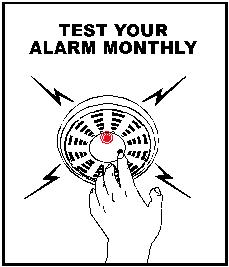
  • Make sure you have smoke alarms and carbon monoxide detectors installed. Test them to make sure they’re working properly, and change their batteries at least annually.
  • Check to see that your house number is clearly visible from the street, and unobstructed by any tree branches or structural overhangs.  If first-responders are called to your home to put out a fire, make sure they can find you.
  • Be aware of lit candles.  Never leave them unattended, and always blow them out when leaving home or going to bed. This is especially important during the holidays when candles are used as holiday decorations. Also, keep them out of the way of drapes and plants, and out of reach of children and especially pets, whose tails can accidentally knock over a candle or come into contact with its flame.
  • Never use barbecue grills indoors, either for cooking or as a heat source. The carbon monoxide they emit cannot be adequately vented, and their flammable materials pose safety hazards. Also, do not use the oven to heat the indoors. Space heaters are safer and more energy-efficient.  Ask your InterNACHI home inspector to perform an energy audit to find heat leaks, and to suggest low-cost ways to keep your home warm and comfortable during cold weather.
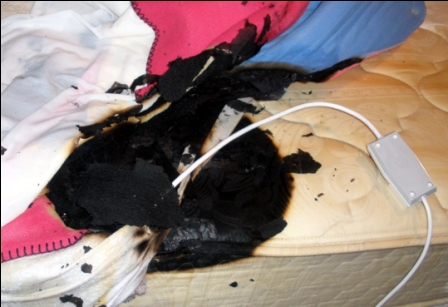
  • Consider getting rid of your electric blanket. The fire hazards associated with them make the prospect of trading them in for a thick comforter or multiple blankets much less worrisome. When their embedded cords become bent, the internal wiring can break, causing them to short out and start an electrical fire. This electric blanket shorted out and caught fire, burning the bedding and mattress.  Its user barely escaped serious injury.
  • Be extra-vigilant when using hot pads, hot plates, Bunsen burners and portable cooktops. They can overheat and burn the surface they’re sitting on, or burn through a cup or pot sitting on top, which can lead to smoke and fire. Never leave these unattended, and always unplug (or extinguish) them when not in use.
  • Unplug portable electronic devices and other small appliances when not in use. Coffeemakers, blow dryers and other devices we use daily still draw current when they’re plugged in, even if they’re turned off. A faulty device can cause an electrical fire that can be devastating.  One family in Boulder, Colo., returned home one day to discover their house burned to the ground; the fire marshal discovered that the cause was a switched-off curling iron that was left plugged into the wall’s receptacle. Get into the habit of unplugging, just to be safe.
  • Use extension cords sparingly, and always unplug them when not in use. Some electrical devices work best when plugged directly into the wall’s receptacle or outlet, especially if they have a ground wire (which you should never cut off).  Devices plugged into extension cords can easily overheat (themselves or the extension cords), damaging wires within walls and weakening your electrical system, potentially causing an electrical fire.  Always check for the UL-listed label on extension cords. Remember that they also pose a tripping hazard, which is another reason to minimize their use.
  • Clean your clothes dryer’s lint trap after each use. Your dryer should vent directly to the outdoors. Check to make sure that there are no obstructions in the vent hose, such as birds’ nests, foliage or other debris.  The vent should have a damper to keep wildlife and debris out, but it should not have a screen, which can trap combustibles, allowing them to accumulate, heat up, and possibly catch fire.
  • If you have a fireplace, remember to have it professionally inspected and cleaned periodically by a chimney sweep.  Creosote buildup can cause a fire that may unexpectedly back into the living space. Make sure your damper is working properly, and that the chimney lining is in good condition. The next time your InterNACHI inspector inspects your roof, s/he can check for adequate flashing around the chimney, as well as its structural integrity. Make sure the fire is completely out before you leave the home. Keep all kindling and combustibles a safe distance away from the mouth of the fireplace. Make use of a screen at the hearth to prevent embers from escaping. And avoid burning green wood, which doesn’t burn as evenly or safely as dry wood.

Smoke Alarms

All new residential construction requires the installation of smoke alarms, usually on each floor of the home, as well as outside each sleeping area. Many newer smoke alarms can also detect carbon monoxide. This silent and odorless killer is one of the primary causes of accidental death because family members can be fatally poisoned while sleeping.

Smoke alarms come in two types. Photoelectric alarms can sense smoky and smoldering fires. Ionization alarms are quicker at detecting flames and fast-moving fire. Dual-sensor smoke alarms combine both these features, and are recommended by the USFA because it’s impossible to predict the type of fire that may erupt in a home. There are also smoke alarms that vibrate and/or flash strobe lights to alert home dwellers who are vision-impaired or hard of hearing.

The leading U.S. manufacturer of residential smoke alarms, as well as home fire extinguishers, is Kidde. Their dual-sensor smoke alarms were the subject of a voluntary recall by the U.S. Consumer Product Safety Commission in the summer of 2009 because of a malfunction caused by an electrostatic discharge created during their installation, rendering them inoperable. Make sure that you install any portable smoke alarms and carbon monoxide detectors safely, and test them after installation. You can also ask your local fire department to do this for you.

Many smoke alarms are hard-wired into the home’s electrical system, but may still have batteries for backup in the event of a power outage. They also typically have a test button. Make sure you test them once a month, and replace the batteries once a year. If you hear a chirping noise, this is a signal that the batteries are weak and need replacing.

Some smoke alarms have “nuisance” buttons.  If you burn something that you’re cooking and accidentally set off the alarm, you can press the nuisance button to turn it off. Remember not to actually disable the alarm; you may forget to reset it later.  Simply clear the room of smoke instead.
 

Rebates and Discounts

Under most standard homeowners and even renters insurance policies today, having smoke alarms, carbon monoxide detectors and fire extinguishers in the home will qualify policyholders for rebates and discounts on their premiums.  Some newer homes now have sprinkler systems, and various municipalities around the U.S. are mandating their installation, depending on the square footage of the home.
 
In summary, installing dual-sensor smoke alarms and carbon monoxide detectors, as well as taking some common-sense precautions and performing regular household maintenance, will help keep your family safe from the destructive and potentially lethal effects of a house fire. Schedule an inspection with your InterNACHI inspector to see where you can fortify your home against this threat.


Residential Fire Sprinklers

Residential Fire Sprinklers

by Nick Gromicko and Rob London
In a growing trend that many say will save even more lives than smoke alarms and carbon monoxide detectors, fire sprinklers are now available for residences.

Residential fires destroy an alarming number of lives and property. In 2007 in the U.S., there were 414,000 residential fires that caused:

  • 2,895 fire deaths;An installed residential sprinkler in new construction
  • 14,000 injuries; and
  • $7.5 billion in property damage.
Residential sprinklers, listed by the Underwriters Laboratories (UL), are now available to homeowners. The development of chloro-polyvinyl chloride and other listed non-metallic pipe has simplified installation, making sprinkler systems more cost-effective. Because of their improved sensitivity, they are designed to respond to fires much faster than standard commercial and industrial sprinkler systems.
Here are a few facts you might not know about fire sprinklers:
  • On average, they use significantly less water to extinguish a fire than would be required by the fire department. Sprinklers use just 10 to 26 gallons per minute (gpm), while fire crews use 125 gpm, per hose.
  • Insurance premiums are often lower for homes that are equipped with fire sprinklers, which help pay for the systems.
  • In buildings equipped with sprinklers, 90% of fires are contained by the operation of a single sprinkler head.
  • Newer fire sprinkler heads are designed to activate independently of one another, leaving unneeded heads in reserve, and sparing water-sensitive items.
  • Fire sprinklers are triggered only by temperatures that surpass a certain heat threshold, making it practically impossible to trigger them accidentally.

A recent study conducted by the UL found that house fires are getting worse; the time needed to escape some types of fires has been reduced from approximately 17 minutes to as little as three minutes, in some situations.  According to the study, this change is largely due to the disuse of natural fabrics for furnishings, such as wool, cotton and rayon, in favor of more flammable synthetics, such as polyester and plastic. Sprinkler systems are thus becoming increasingly more important in residences, just as they have been relied upon in commercial buildings for decades.

Sprinklers respond to fires immediately and automatically from locations that may be dangerous for firefighters to reach. In contrast, fire departments can be quite slow to respond, given the following potential delays:

  • In rural areas, it may take a long time for fire trucks to reach their destination.
  • Calls made at night are responded to more slowly than calls made during the day, as most career and volunteer firefighters are asleep.
  • If the 9-1-1 call comes from a cell phone, the dispatcher will have greater difficulty pinpointing the fire’s location than if the call comes from a landline.
  • While some fire departments are always well-prepared, in many areas, the firefighters will need time to assemble, get suited up, and prepare the fire truck.Residential fire sprinklers can inconspicuously blend in with ceilings and walls
  • Fire trucks can be slowed by traffic, and they can even get lost en route.

In residential applications, sprinklers are smaller than traditional commercial sprinklers, and they can be aesthetically coordinated with any room décor, and mounted flush with walls and ceilings. They are also inexpensive, relative to the cost of the building, and the damage inflicted by a potential fire. Presently, the cost of a home sprinkler system will add 1% to 1.5% to the cost of new construction, and the price will probably come down in the future. Although more expensive, it is possible to retrofit existing homes with sprinkler systems.

Inspectors should pass the following recommendations on to their clients:

  • Always make sure control valves are in the open position.
  • Always report damage to any part of a sprinkler system immediately.
  • Never paint a fire sprinkler.
  • Never stack items close to fire sprinklers, as this may reduce their heat sensitivity. Tops of storage or furniture should be at least 18 inches below fire sprinklers, according to the National Fire Sprinkler Association.
  • Never hang anything from any part of a fire sprinkler system
In summary, residential fire sprinklers are a valuable, cost-effective safety addition to any home, although they require periodic maintenance.

Smoke Alarm Inspection

Smoke Alarm Inspection

by Nick Gromicko and Rob London

A smoke alarm, also known as a smoke detector, is a device that detects smoke and issues an audible sound and/or a visual signal to alert residents to a potential fire.

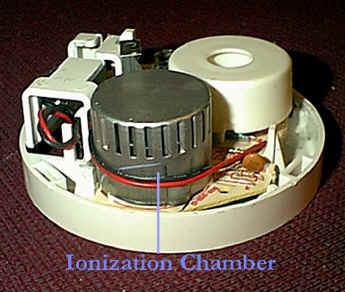
Facts and FiguresIonization style smoke alarm
 
According to the Consumer Product Safety Commission:
  • Almost two-thirds of reported deaths caused by home fires from 2003 to 2006 resulted from fires in homes that lacked working smoke alarms.
  • Older homes are more likely to lack an adequate number of smoke alarms because they were built before requirements increased.
  • In 23% of home fire deaths, smoke alarms were present but did not sound. Sixty percent of these failures were caused by the power supplies having been deliberately removed due to false alarms.
  • Every year in the United States, about 3,000 people lose their lives in residential fires. Most of these deaths are caused by smoke inhalation, rather than as a result of burns.

Smoke Alarm Types

Ionization and photoelectric are the two main designs of smoke detectors. Both types must pass the same tests to be certified to the voluntary standard for smoke alarms, but they perform differently in different types of fires. Detectors may be equipped with one or both types of sensors — known as dual-sensor smoke alarms — and possibly a heat detector, as well. These sensors are described as follows:

  • Ionization smoke sensors are the most common and economical design, and are available at most hardware stores. They house a chamber sided by small metal plates that irradiate the air so that it conducts electricity. When smoke enters the chamber, the current flow becomes interrupted, which triggers an alarm to sound. These sensors will quickly detect flaming-type fires but may be slower to react to smoldering fires.
  • Photoelectric smoke sensors use a light-sensitive photocell to detect smoke inside the detector. They shine a beam of light that will be reflected by smoke toward the photocell, triggering the alarm. These sensor types work best on smoldering fires but react more slowly to flaming fires. They often must be hard-wired into the house’s electrical system, so some models can be installed only in particular locations.

While heat detectors are not technically classified as smoke detectors, they are useful in certain situations where smoke alarms are likely to sound false alarms. Dirty, dusty industrial environments, as well as the area surrounding cooking appliances, are a few places where false alarms are more likely and where heat detectors may be more useful.

Location

Individual authorities having jurisdiction (AHJs) may have their own requirements for smoke-alarm placement, so inspectors and homeowners can check with their local building codes if they need specific instructions. The following guidelines, however, can be helpful.

Smoke alarms should be installed in the following locations:

  • on the ceiling or wall outside of each separate sleeping area in the vicinity of bedrooms;
  • in each bedroom, as most fires occur during sleeping hours;
  • in the basement, preferably on the ceiling near the basement stairs;
  • in the garage, due to all the combustible materials commonly stored there;
  • on the ceiling or on the wall with the top of the detector between 6 to 12 inches from the ceiling; and/or
  • in each story within a building, including basements and cellars, but not crawlspaces or uninhabited attics.

Smoke alarms should not be installed in the following locations:

  • near heating or air-conditioning supply and return vents;
  • near a kitchen appliance;
  • near windows, ceiling fans or bathrooms equipped with a shower or tub;
  • where ambient conditions, including humidity and temperature, are outside the limits specified by the manufacturer’s instructions;
  • within unfinished attics or garages, or in other spaces where temperatures can rise or fall beyond the limits set by the manufacturer;
  • where the mounting surface could become considerably warmer or cooler than the rest of the room, such as an inadequately insulated ceiling below an unfinished attic; or
  • in dead-air spots, such as the top of a peaked roof or a ceiling-to-wall corner.

Power and Interconnection

Power for the smoke alarms may be hard-wired directly into the building’s electrical system, or it may come from just a battery. Hard-wired smoke detectors are more reliable because the power source cannot be removed or drained, although they will not function in a power outage. Battery-operated units often fail because the battery can be easily removed, dislodged or drained, although these units can be installed almost anywhere. Older buildings might be restricted to battery-powered designs, while newer homes generally offer more options for power sources. If possible, homeowners should install smoke alarms that are hard-wired with a battery backup, especially during a renovation or remodeling project.

Smoke alarms may also be interconnected so that if one becomes triggered, they all sound in unison. Interconnected smoke alarms are typically connected with a wire, but new technology allows them to be interconnected wirelessly. The National Fire Protection Agency requires that smoke alarms be AFCI-protected.

Wireless Smoke Alarms
Submitted by Don Hester 

Interconnected smoke alarms are a very important part of fire safety in the home. In the event of fire smoke alarms that are interconnected will activate the alarm on all of the smoke alarms in a home. This will greatly improve the chance of hearing an alarm if a fire starts in another area of the home from where you are.

Smoke detectors in most older homes are not hard wired nor are they interconnected. Now, you can now purchase wireless interconnected smoke alarms.

Wireless Smoke Alarm Wenatchee Home Inspector

There are various versions of these, both battery and AC powered. Be sure the wireless interconnected smoke detectors are of the same make and model in order for them to be able to communicate with each other.

Remember that a smoke detector installed within 20 feet of a kitchen /cooking area should have a “silence” or “hush” button so nuisance alarms can be easily dismissed.

Smoke Alarm Placement Wenatchee Home Inspectior

 Helpful Tips

  • Parents should stage periodic night-time fire drills to assess whether their children will awaken from the alarm and respond appropriately.
  • Never disable a smoke alarm. Use the alarm’s silencing feature to stop nuisance or false alarms triggered by cooking smoke or fireplaces.
  • Test smoke alarms monthly, and replace their batteries at least twice per year. Change the batteries when you change your clocks for Daylight Saving Time.  Most models emit a chirping noise when the batteries are low to alert the homeowner that they need replacement.
  • Smoke alarms should be replaced when they fail to respond to testing, or every 10 years, whichever is sooner. The radioactive element in ionization smoke alarms will decay beyond usability within 10 years.
  • If you have any questions or concerns related to smoke alarms or fire dangers in the home, consult with an InterNACHI inspector during your next scheduled inspection.
  • Smoke detectors should be replaced if they become damaged or wet, are accidentally painted over, are exposed to fire or grease, or are triggered without apparent cause.
  • Note the sound of the alarm. It should be distinct from other sounds in the house, such as the telephone, doorbell and pool alarm.
In summary, smoke alarms are invaluable, life-saving appliances when they are installed properly and adequately maintained.
  

Pet Allergens

Pet Allergens

by Nick Gromicko and Rob London
Cats and dogs produce allergens that pose a health threat to certain individuals.
Cats cause a great deal of suffering to allergic individuals
 
Modes of Transmission

Cat dander consists of microscopic pieces of cat skin that have dried, flaked off and become airborne. Shed dander can land on and stick to bedding, curtains, carpeting, and other surfaces, including people’s skin and clothing. It contains Fel D1, a glycoprotein found in the cat’s sebaceous glands, located under their skin, and, to a lesser extent, it is found in cats’ saliva and urine. Fel D1 can cause rapid allergic reactions in sensitive individuals. Unlike cats, the dogs’ allergen, Can F1, is found in higher concentrations in their saliva than in their sebaceous glands.

Facts and Figures

  • More people are allergic to cats than they are to dogs. This may be due to the severity of the allergen Fe D1, or because dogs are generally bathed regularly, whereas cats are not.
  • Between 6 and 10 million Americans are allergic to cats, and approximately one-third of them have cats in their homes.
  • Animal dander, hair, and other organic debris in homes can also result in a significant increase in the level of dust mites, mite feces and other allergenic insect parts.
  • Allergens may be found months or years after a pet has been removed from a house.
  • Pet-borne allergens commonly infiltrate places where pets have never been present, such as schools, workplaces, and other public spaces. Since dander allergens are sticky, they can be transported to these places on the clothing of pet owners.
  • Animal hair, despite popular belief, is not considered to be a significant allergen. However, hair can collect pollen, dust, mold, and other allergens.  Some cat and dog breeds, like this siberian cat, are believed by many to be hypoallergenic
  • There are no “non-allergenic” breeds of dogs or cats. Some breeds of both species, however, are believed to be hypoallergenic; anecdotal reports claim that the Siberian, rex and sphynx cat breeds are less likely to provoke an allergic attack than most other cats. Similarly, dog breeds, such as poodles and schnauzers, have been reported to be less allergenic. None of these claims has been validated scientifically.
Cat and Dog Allergy Symptoms
These include:
  • itching;
  • sneezing and congestion;
  • redness, itching, swelling and watering of the eyes;
  • post-nasal drip, itching or hoarseness, and the need to clear the throat often;
  • itchy rashes or hives;
  • itching, plugging or popping in the ears; and
  • coughing, wheezing, tightness in the chest, frequent bronchitis, and a shortness of breath.
How to Test If a Cat or Dog Has Been in a Building
Pets are forbidden by many lease agreements, which may then be violated by tenants who secretly house cats or dogs. Also, cats may visit a residence at night to forage for food or gain shelter. The following detection methods may be used:
  • Smell for the animal. If the cat is an indoor cat, a litter box must have been used somewhere in the building, and they almost always produce an odor. Even after they are removed, the smell from a litter box may linger for quite some time. If a male cat was present in the building and he has urinated on or “marked” any areas, the odor will be very strong.
  • Look for hair. Somewhere in the building, especially where the cat likes to sleep or rest, there will be large amounts of hair.
  • Use a blacklight to check for pet urine.

Cleaning Tips for Buildings Previously Occupied by Cats and Dogs

Inspectors may be asked about pet-allergen cleanup by clients who are looking to buy a home but are concerned about the air quality in their prospective new home. The following suggestions may be offered:

  • Obtain a thorough, professional duct cleaning.
  • Commercially steam-clean, professionally dry-clean, or use very hot water to launder clothing.
  • Wash and use a HEPA vacuum for interior surfaces. Note that ordinary vacuum cleaners, which cause allergenic particles to become airborne, are ineffective and may even worsen the problem for sensitive occupants.

Advice for Clients with Pets

A combination of approaches—medical control of symptoms, good housecleaning and planning—is most likely to succeed in allowing an allergic person to live with pets. For allergic clients who won’t give up their pets, inspectors can pass on the following tips:

  • Take allergy medication. Most fall under one of the following three categories:Get allergy shots. These are not always effective, however, and completing treatment can take years.
    • antihistamines, such as over-the-counter Claritin or Benadryl, or the prescription drugs Allegra or Zyrtec;
    • decongestants, such as OTC Sudafed or prescription Allegra-D; or
    • prescription steroids, such as Flonase or Nasonex sprays.
  • Bathe your pet on a weekly basis. Cats can get used to being bathed, but it’s critical to only use products labeled for them.Keep your pets off the couch if you are allergic to them!
  • Keep the pet outdoors as much as possible.
  • Allergic individuals should not hug, pet or kiss their pets.
  • Have your pet spayed or neutered. The allergen produced by a cat is highest in unaltered males and lowest in altered males.
  • Remove clothing worn after grooming or playing with pets.
  • Litter boxes should be placed in an area unconnected to the air supply to the rest of the home, and should be avoided by allergic individuals.
  • Design a cleaning regimen that can substantially reduce those levels, ranging from discarding materials to HEPA-vacuuming to washing certain surfaces.
  • Maintain adequate ventilation.
  • Remove as much carpet from the home as is feasible. The less dander-catching furnishings, such as cloth curtains and blinds, the better.
  • Clean frequently and thoroughly to remove dust and dander, washing articles such as couch covers and pillows, curtains and pet beds.
  • Create an “allergy-free” zone in your home—preferably, the allergic person’s bedroom—and strictly prohibit the pet’s access to it. Consider using impermeable covers for the mattress and pillows.
  • Keep pets off furniture, especially upholstered furniture where dander can be easily transferred.
In summary, irritation and contamination caused by pet allergens can be limited by proper care of their hygiene, homes and owners.
 

Mold, Moisture and Your Home

Mold, Moisture and Your Home

 
Mold Basics 
  • The key to mold control is moisture control.
  • If mold is a problem in your home, you should clean up the mold promptly and fix the water problem.
  • It is important to dry water-damaged areas and items within 24 to 48 hours to prevent mold growth.

Why is mold growing in my home?

 
Molds are part of the natural environment. Outdoors, molds play a part in nature by breaking down dead organic matter, such as fallen leaves and dead trees.  But indoors, mold growth should be avoided.  Molds reproduce by means of tiny spores; the spores are invisible to the naked eye and float through outdoor and indoor air.  Mold may begin growing indoors when mold spores land on surfaces that are wet. There are many types of mold, and none of them will grow without water or moisture.
 
Can mold cause health problems?
 

Molds are usually not a problem indoors, unless mold spores land on a wet or damp spot and begin growing.  Molds have the potential to cause health problems. Molds produce allergens (substances that can cause allergic reactions), irritants and, in some cases, potentially toxic substances (mycotoxins). Inhaling or touching mold or mold spores may cause allergic reactions in sensitive individuals. Allergic responses include hay fever-type symptoms, such as sneezing, runny nose, red eyes, and skin rash (dermatitis). Allergic reactions to mold are common. They can be immediate or delayed. Molds can also cause asthma attacks in people with asthma who are allergic to mold. In addition, mold exposure can irritate the eyes, skin, nose, throat and lungs of both mold-allergic and non-allergic people.  Symptoms other than the allergic and irritant types are not commonly reported as a result of inhaling mold.  Research on mold and health effects is ongoing. This article provides a brief overview; it does not describe all potential health effects related to mold exposure. For more detailed information, consult a health professional. You may also wish to consult your state or local health department.

How do I get rid of mold?  

It is impossible to get rid of all mold and mold spores indoors. Some mold spores will be found floating through the air and in house dust. Mold spores will not grow if moisture is not present. Indoor mold growth can and should be prevented or controlled by controlling moisture indoors. If there is mold growth in your home, you must clean up the mold and fix the water problem. If you clean up the mold but don’t fix the water problem, then, most likely, the mold problem will recur.
 
Who should do the cleanup?
 
This depends on a number of factors. One consideration is the size of the mold problem. If the moldy area is less than about 10 square feet (less than roughly a 3-foot by 3-foot patch), in most cases, you can handle the job yourself, following the guidelines below.
  • If there has been a lot of water damage, and/or mold growth covers more than 10 square feet, consult with an InterNACHI inspector.
  • If you choose to hire a contractor (or other professional service provider) to do the cleanup, make sure the contractor has experience cleaning up mold. Check references and ask the contractor to follow the recommendations of the EPA, the guidelines of the American Conference of Governmental Industrial Hygenists (ACGIH), or other guidelines from professional or government organizations.
  • Do not run the HVAC system if you know or suspect that it is contaminated with mold. This could spread mold throughout the building. 
  • If the water and/or mold damage was caused by sewage or other contaminated water, then call in a professional who has experience cleaning and fixing buildings damaged by contaminated water. 
  • If you have health concerns, consult a health professional before starting cleanup.

Tips and Techniques 

 
The tips and techniques presented in this section will help you clean up your mold problem. Professional cleaners or remediators may use methods not covered here. Please note that mold may cause staining and cosmetic damage.  It may not be possible to clean an item so that its original appearance is restored.   
  • Fix plumbing leaks and other water problems as soon as possible. Dry all items completely.
  • Scrub mold off hard surfaces with detergent and water, and dry completely.
  • Absorbent or porous materials, such as ceiling tiles and carpet, may have to be thrown away if they become moldy. Mold can grow on or fill in the empty spaces and crevices of porous materials, so the mold may be difficult or impossible to remove completely.
  • Avoid exposing yourself or others to mold.
  • Do not paint or caulk moldy surfaces.
  • Clean up the mold and dry the surfaces before painting. Paint applied over moldy surfaces is likely to peel. If you are unsure about how to clean an item, or if the item is expensive or of sentimental value, you may wish to consult a specialist. Specialists in furniture repair and restoration, painting and art restoration and conservation, carpet and rug cleaning, water damage, and fire or water restoration are commonly listed in phone books. Be sure to ask for and check references. Look for specialists who are affiliated with professional organizations.
What to Wear When Cleaning Moldy Areas:  
  • Avoid breathing in mold or mold spores. In order to limit your exposure to airborne mold, you may want to wear an N-95 respirator, available at many hardware stores and from companies that advertise on the Internet. (They cost about $12 to $25.)  Some N-95 respirators resemble a paper dust mask with a nozzle on the front, and others are made primarily of plastic or rubber and have removable cartridges that trap and prevent most of the mold spores from entering. In order to be effective, the respirator or mask must fit properly, so carefully follow the instructions supplied with the respirator. Please note that the Occupational Safety and Health Administration (OSHA) requires that respirators fit properly (via fit testing) when used in an occupational setting.
  • Wear gloves. Long gloves that extend to the middle of the forearm are recommended. When working with water and a mild detergent, ordinary household rubber gloves may be used. If you are using a disinfectant, a biocide such as chlorine bleach, or a strong cleaning solution, you should select gloves made from natural rubber, neoprene, nitrile, polyurethane or PVC.  Avoid touching mold or moldy items with your bare hands.   
  • Wear goggles.  Goggles that do not have ventilation holes are recommended.  Avoid getting mold or mold spores in your eyes.
How do I know when the remediation or cleanup is finished?

You must have completely fixed the water or moisture problem before the cleanup or remediation can be considered finished, based on the following guidelines:

  • You should have completed the mold removal.  Visible mold and moldy odors should not be present. Please note that mold may cause staining and cosmetic damage.
  • You should have revisited the site(s) shortly after cleanup, and it should show no signs of water damage or mold growth.  
  • People should have been able to occupy or re-occupy the area without health complaints or physical symptoms.  
  • Ultimately, this is a judgment call; there is no easy answer. If you have concerns or questions, be sure to ask your InterNACHI inspector during your next scheduled inspection.


Moisture and Mold Prevention and Control Tips
  • Moisture control is the key to mold control, so when water leaks or spills occur indoors, ACT QUICKLY.  If wet or damp materials or areas are dried within 24 to 48 hours after a leak or spill happens, in most cases, mold will not grow.
  • Clean and repair roof gutters regularly.
  • Make sure the ground slopes away from the building’s foundation so that water does not enter or collect around the foundation.
  • Keep air-conditioning drip pans clean and the drain lines unobstructed and flowing properly.
  • Keep indoor humidity low. If possible, keep indoor humidity below 60% relative humidity (ideally, between 30% to 50%).  Relative humidity can be measured with a moisture or humidity meter, which is a small, inexpensive instrument (from $10 to $50) that is available at many hardware stores.
  • If you see condensation or moisture collecting on windows, walls or pipes, ACT QUICKLY to dry the wet surface and reduce the moisture/water source. Condensation can be a sign of high humidity.

Actions that will help to reduce humidity:

  • Vent appliances that produce moisture, such as clothes dryers, stoves, and kerosene heaters, to the outdoors, where possible.  (Combustion appliances, such as stoves and kerosene heaters, produce water vapor and will increase the humidity unless vented to the outside.)
  • Use air conditioners and/or de-humidifiers when needed.
  • Run the bathroom fan or open the window when showering.  Use exhaust fans or open windows whenever cooking, running the dishwasher or dishwashing, etc.

Actions that will help prevent condensation:

  • Reduce the humidity (see above).
  • Increase ventilation and air movement by opening doors and/or windows, when practical. Use fans as needed.
  • Cover cold surfaces, such as cold water pipes, with insulation.
  • Increase air temperature.

Testing or Sampling for Mold

 
Is sampling for mold needed?  In most cases, if visible mold growth is present, sampling is unnecessary.  Since no EPA or other federal limits have been set for mold or mold spores, sampling cannot be used to check a building’s compliance with federal mold standards. Surface sampling may be useful to determine if an area has been adequately cleaned or remediated. Sampling for mold should be conducted by professionals who have specific experience in designing  mold sampling protocols, sampling methods, and interpreting results. Sample analysis should follow analytical methods recommended by the American Industrial Hygiene Association (AIHA), the American Conference of Governmental Industrial Hygienists (ACGIH), or other professional organizations.
 
Suspicion of Hidden Mold 
 
You may suspect hidden mold if a building smells moldy but you cannot see the source, or if you know there has been water damage and residents are reporting health problems. Mold may be hidden in places such as the backside of dry wall, wallpaper or paneling, the top-side of ceiling tiles, or the underside of carpets and pads, etc. Other possible locations of hidden mold include areas inside walls around pipes (with leaking or condensing pipes), the surface of walls behind furniture (where condensation forms), inside ductwork, and in roof materials above ceiling tiles (due to roof leaks or insufficient insulation).
 
Investigating Hidden Mold Problems 
 
Investigating hidden mold problems may be difficult and will require caution when the investigation involves disturbing potential sites of mold growth. For example, removal of wallpaper can lead to a massive release of spores if there is mold growing on the underside of the paper. If you believe that you may have a hidden mold problem, consider hiring an experienced professional.
 
Cleanup and Biocides 
 
Biocides are substances that can destroy living organisms.  The use of a chemical or biocide that kills organisms such as mold (chlorine bleach, for example) is not recommended as a routine practice during mold cleanup. There may be instances, however, when professional judgment may indicate its use (for example, when immune-compromised individuals are present). In most cases, it is not possible or desirable to sterilize an area; a background level of mold spores will remain, and these spores will not grow if the moisture problem has been resolved. If you choose to use disinfectants or biocides, always ventilate the area and exhaust the air to the outdoors. Never mix chlorine bleach with other cleaning solutions or detergents that contain ammonia because toxic fumes could be produced.   
 
Please note: Dead mold may still cause allergic reactions in some people, so it is not enough to simply kill the mold; it must also be removed.
 
Ten Things You Should Know About Mold
 
 1.  Potential health effects and symptoms associated with mold exposure include allergic reactions, asthma, and other respiratory complaints. 
 
 2.  There is no practical way to eliminate all mold and mold spores in the indoor environment; the way to control indoor mold growth is to control moisture.
 
 3.  If mold is a problem in your home, you must clean up the mold and eliminate sources of moisture.
 
 4.  Fix the source of the water problem or leak to prevent mold growth.
 
 5.  Reduce indoor humidity (to 30% to 60%) to decrease mold growth by: 
a. venting bathrooms, dryers, and other moisture-generating sources to the outside;
b. using air conditioners and de-humidifiers;
c. increasing ventilation; and
d. using exhaust fans whenever cooking, dishwashing, and cleaning.  
 6.  Clean and dry any damp or wet building materials and furnishings within 24 to 48 hours to prevent mold growth.
 
 7.  Clean mold off hard surfaces with water and detergent, and dry completely. Absorbent materials that are moldy (such as carpeting and ceiling tiles) may need to be replaced. 
 
 8.  Prevent condensation.  Reduce the potential for condensation on cold surfaces (i.e., windows, piping, exterior walls, roof and floors) by adding insulation. 
 
 9.  In areas where there is a perpetual moisture problem, do not install carpeting.
 
10.  Molds can be found almost anywhere; they can grow on virtually any substance, provided moisture is present. There are molds that can grow on wood, paper, carpet, and foods.